0%
Reading Progress
Scroll to track your progress
Hypothyroidism
What is Hypothyroidism?
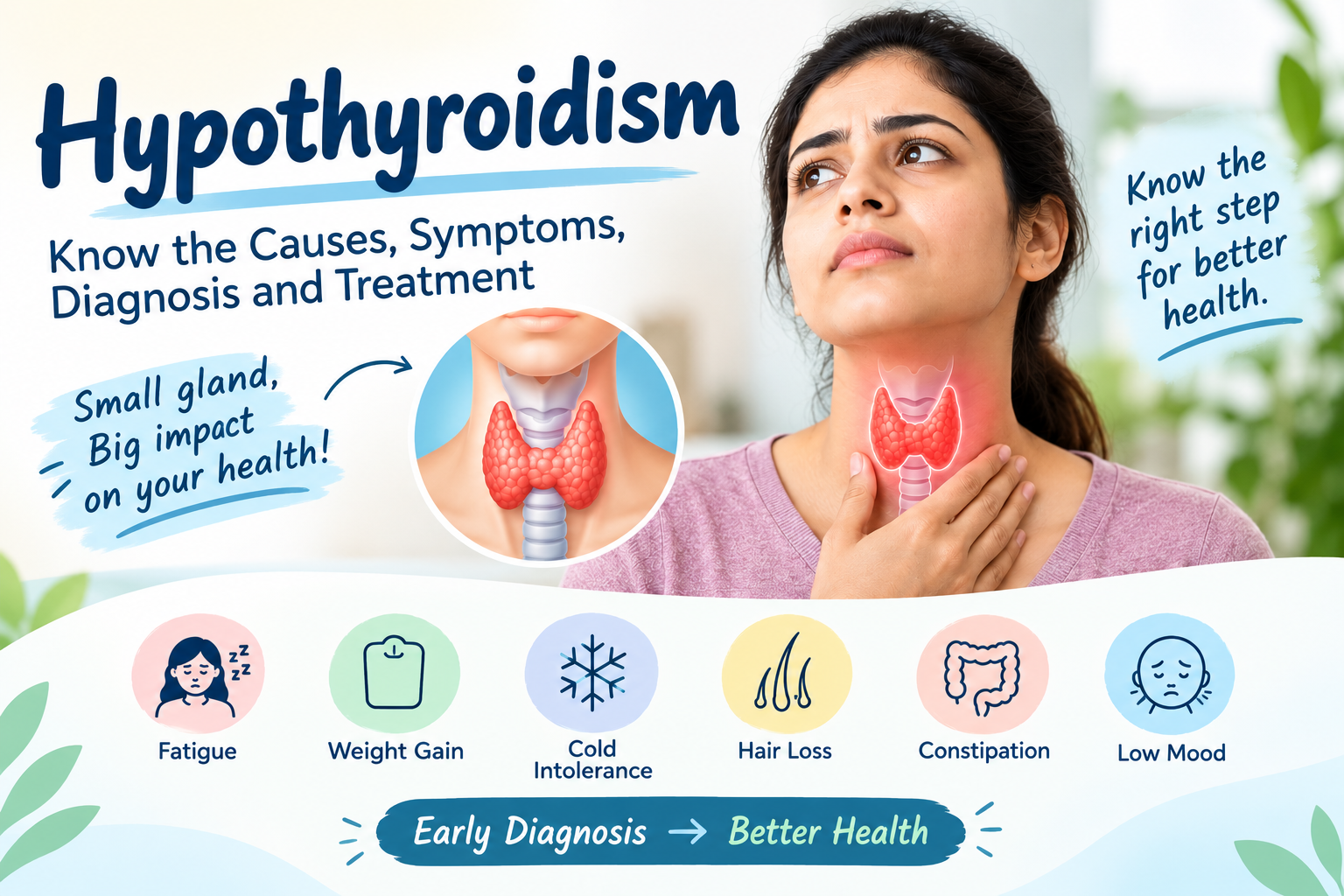
Hypothyroidism is a condition in which the thyroid gland does not produce enough thyroid hormones to meet the body's needs. Thyroid hormones play an important role in regulating metabolism, energy production, body temperature, and overall growth and development.
When thyroid hormone levels are low, many body functions slow down, leading to a variety of symptoms.
What Causes Hypothyroidism?
Several factors can lead to hypothyroidism, including:
- Autoimmune thyroid disease (Hashimoto's thyroiditis)
- Thyroid surgery
- Radiation treatment to the neck
- Certain medications
- Iodine deficiency
- Congenital thyroid disorders
- Pituitary gland disorders
- Pregnancy-related thyroid problems
What Are the Common Symptoms of Hypothyroidism?
Common symptoms include:
- Fatigue and tiredness
- Weight gain
- Increased sensitivity to cold
- Dry skin
- Hair thinning or hair loss
- Constipation
- Depression or low mood
- Slow heart rate
- Puffy face
- Muscle weakness and joint pain
- Irregular menstrual cycles
- Difficulty concentrating and memory problems
Who Is at Risk of Developing Hypothyroidism?
The risk is higher in:
- Women, especially above 30 years
- Individuals with a family history of thyroid disorders
- People with autoimmune diseases
- Pregnant women or those who recently gave birth
- Individuals who have undergone thyroid surgery or radiation therapy
How is Hypothyroidism Diagnosed?
Doctors diagnose hypothyroidism through:
- Blood Tests
- Thyroid-Stimulating Hormone (TSH)
- Free T4 (Thyroxine)
- Thyroid Antibody Tests (if autoimmune disease is suspected)
- A high TSH level and low Free T4 level usually indicate hypothyroidism.
How is Hypothyroidism Treated?
The standard treatment is thyroid hormone replacement therapy using Levothyroxine. This medication helps restore normal hormone levels and improve symptoms.
Treatment usually involves:
Daily medication as prescribed
Regular thyroid function tests
Periodic dose adjustments based on test results
Can Hypothyroidism Be Cured?
Most cases of hypothyroidism cannot be permanently cured, but they can be effectively managed with lifelong treatment and regular monitoring. With proper medication, most people lead healthy and normal lives.
What Foods Should Be Included in a Hypothyroidism Diet?
A healthy diet may include:
- Iodine-rich foods (in moderation)
- Eggs
- Fish
- Dairy products
- Whole grains
- Fruits and vegetables
- Selenium-rich foods such as nuts and seeds
- Protein-rich foods
What Foods Should Be Limited?
Some foods may interfere with thyroid function when consumed excessively:
- Highly processed foods
- Excess sugar
- Excess soy products
- Large amounts of cruciferous vegetables consumed raw (cabbage, cauliflower, broccoli)
- Excessive junk food and fried foods
What Happens if Hypothyroidism is Left Untreated?
Untreated hypothyroidism may lead to:
- High cholesterol
- Heart disease
- Infertility
- Pregnancy complications
- Goiter (enlarged thyroid gland)
- Severe fatigue
- Myxedema (a rare but serious complication)
Can Hypothyroidism Cause Weight Gain?
Yes. Reduced thyroid hormone levels slow down metabolism, which can contribute to weight gain. Proper treatment, balanced nutrition, and regular exercise can help manage weight effectively.
When Should You Consult a Doctor?
Consult a healthcare professional if you experience:
- Persistent fatigue
- Unexplained weight gain
- Hair loss
- Depression
- Irregular periods
- Swelling in the neck
- Difficulty tolerating cold temperatures
Conclusion
Hypothyroidism is a common thyroid disorder that can affect metabolism, energy levels, and overall health. Early diagnosis, appropriate treatment, regular follow-up, and a healthy lifestyle can help individuals manage the condition successfully and maintain a good quality of life.
AI GENERATED
Verified and Approved by
Siddiq nisha U. BSc(Nsg)
Dr.Karthikeyan S. MBBS