0%
Reading Progress
Scroll to track your progress
Renal Calculi
What Are Kidney Stones?
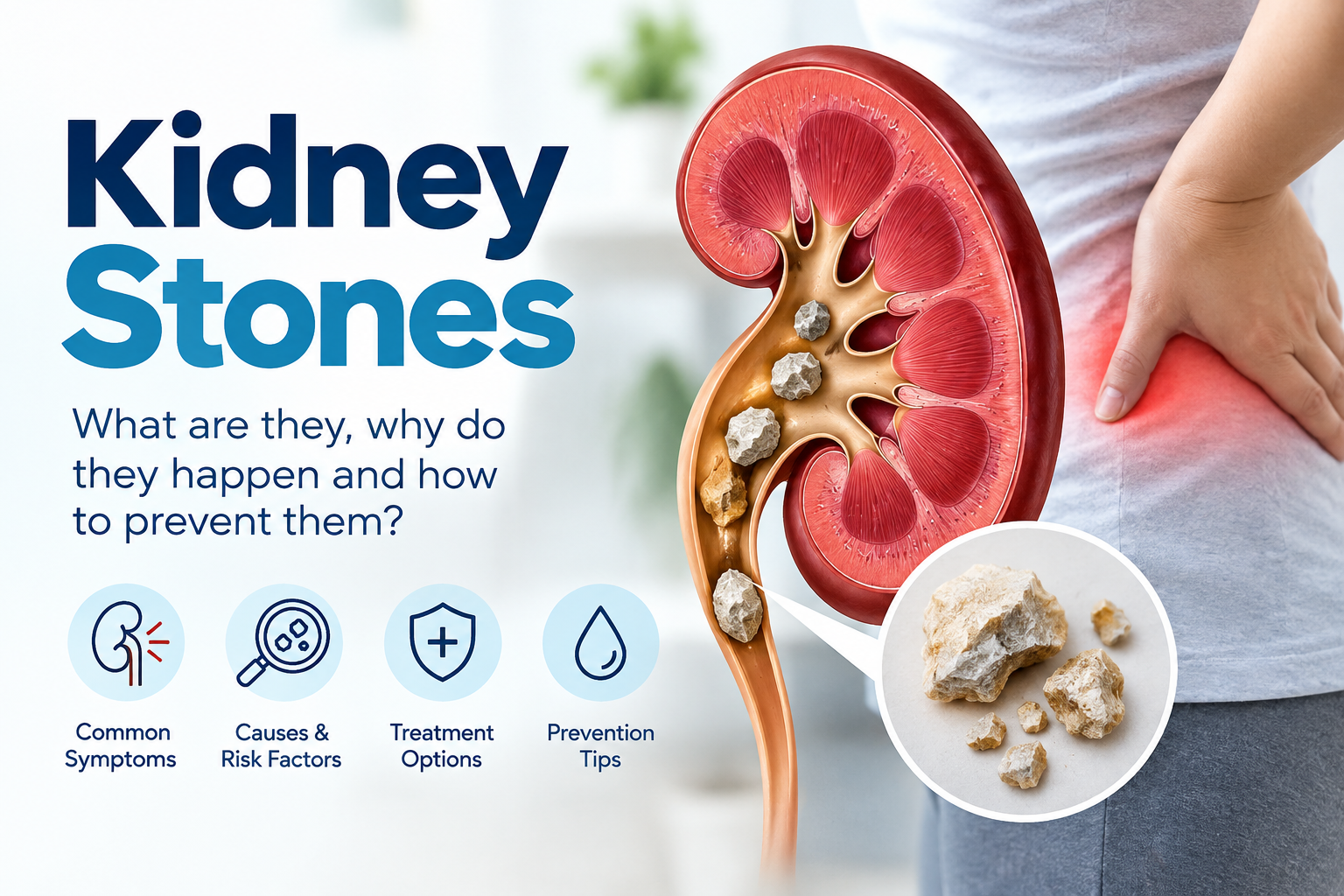
Kidney stones (Renal Calculi) are hard deposits made of minerals and salts that form inside the kidneys. They can vary in size from tiny crystals to larger stones and may affect any part of the urinary tract, including the kidneys, ureters, bladder, and urethra.
Kidney stones can be painful, especially when they move through the urinary tract, but with proper treatment and lifestyle changes, they can often be managed and prevented.
What Causes Kidney Stones?
Kidney stones form when urine contains high levels of certain minerals and salts that crystallize and stick together.
Common causes include:
Not drinking enough water
Excessive salt intake
High protein diet
Family history of kidney stones
Obesity
Certain medications
Recurrent urinary tract infections (UTIs)
Medical conditions such as gout and hyperparathyroidism
What Are the Symptoms of Kidney Stones?
Symptoms may include:
Severe pain in the back, side, lower abdomen, or groin
Pain during urination
Blood in the urine
Cloudy or foul-smelling urine
Frequent urge to urinate
Nausea and vomiting
Fever and chills (if infection is present)
Small stones may pass without causing noticeable symptoms.
What Are the Different Types of Kidney Stones?
1. Calcium Stones
The most common type, usually made of calcium oxalate or calcium phosphate.
2. Uric Acid Stones
Often seen in people who consume high-protein diets or have gout.
3. Struvite Stones
Usually develop after urinary tract infections.
4. Cystine Stones
A rare type caused by a hereditary disorder called cystinuria.
How Are Kidney Stones Diagnosed?
Doctors may use:
Physical examination
Urine analysis
Blood tests
Ultrasound scan
CT scan
X-rays of the urinary tract
These tests help determine the size, location, and type of stone.
How Are Kidney Stones Treated?
Conservative Treatment
Small stones often pass naturally with:
Increased fluid intake
Pain-relieving medications
Medications that help relax the urinary tract
Medical Procedures
1. Extracorporeal Shock Wave Lithotripsy (ESWL)
Uses sound waves to break stones into smaller pieces that can be passed through urine.
2. Ureteroscopy
A thin scope is inserted through the urinary tract to remove or break the stone.
3.Percutaneous Nephrolithotomy (PCNL)
A minimally invasive surgical procedure used for large kidney stones.
4.Surgery
Rarely required unless stones are very large or cause complications.
Can Kidney Stones Be Prevented?
Yes. Prevention measures include:
Drinking 2–3 liters of water daily
Reducing salt intake
Limiting excessive animal protein consumption
Eating a balanced diet rich in fruits and vegetables
Maintaining a healthy weight
Following your doctor's dietary recommendations based on the type of stone
When Should You See a Doctor?
Seek medical attention if you experience:
Severe, persistent pain
Blood in the urine
Fever with urinary symptoms
Difficulty passing urine
Repeated vomiting
Symptoms that interfere with daily activities
Frequently Asked Questions (FAQs)
Are kidney stones dangerous?
Most kidney stones are treatable, but if left untreated, they can cause infections, kidney damage, or urinary obstruction.
Can kidney stones go away on their own?
Small stones often pass naturally through urine, while larger stones may require medical treatment.
Does drinking water help prevent kidney stones?
Yes. Staying well-hydrated is one of the most effective ways to reduce the risk of kidney stone formation.
Can kidney stones come back?
Yes. People who have had kidney stones are at a higher risk of developing them again, making prevention important.
Which foods should be avoided in kidney stones?
Depending on the type of stone, doctors may advise limiting foods high in oxalates, salt, sugar, and excessive animal protein.
Conclusion
Kidney stones are a common urinary tract condition that can cause significant discomfort. Early diagnosis, proper treatment, and healthy lifestyle habits can help prevent complications and reduce the chances of recurrence. Drinking plenty of water, maintaining a balanced diet, and seeking timely medical care are essential for maintaining kidney health.
AI GENERATED
Verified and approved by
Siddiq nisha U. Bsc (Nsg)
Dr.Karthikeyan S. MBBS