0%
Reading Progress
Scroll to track your progress
Introduction Vitamin D deficiency, medically known as Hypovitaminosis D, occurs when the body does not have enough vitamin D to support healthy bones, muscles, and immune function. Vitamin D plays a crucial role in helping the body absorb calcium and phosphorus, which are essential for maintaining strong bones and teeth.
What is Vitamin D?
Vitamin D is a fat-soluble vitamin that is naturally produced by the body when the skin is exposed to sunlight. It can also be obtained through certain foods and dietary supplements.
Causes of Vitamin D Deficiency
- Limited exposure to sunlight
- Inadequate dietary intake of vitamin D
- Dark skin pigmentation
- Obesity
- Kidney or liver diseases
- Malabsorption disorders such as celiac disease and Crohn's disease
- Certain medications that interfere with vitamin D metabolism
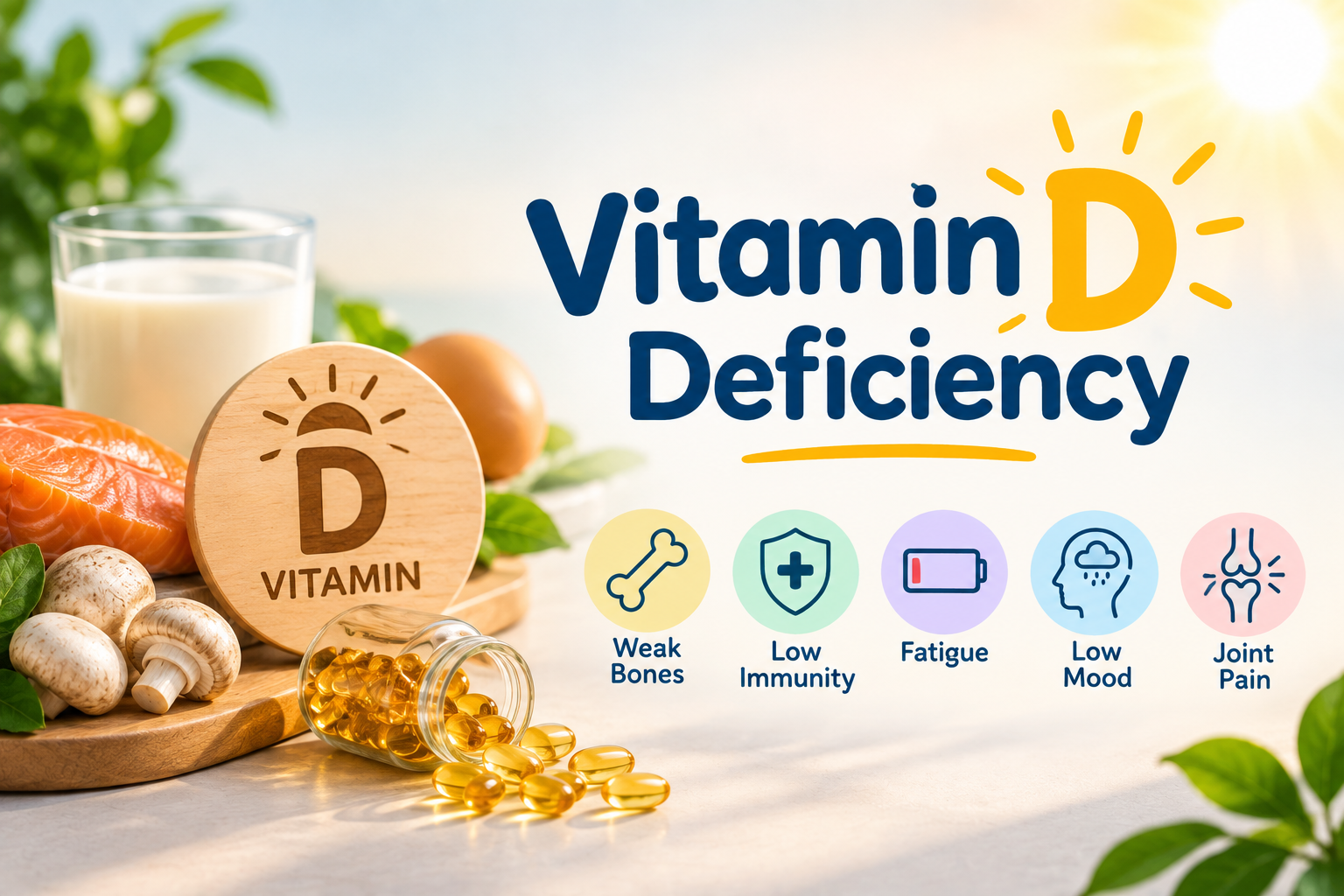
Symptoms of Vitamin D Deficiency
- Fatigue and tiredness
- Bone pain
- Muscle weakness and cramps
- Frequent infections
- Mood changes or depression
- Back pain
- Slow wound healing
- Hair loss
Risk Factors
- Older adults
- People who spend most of their time indoors
- Pregnant and breastfeeding women
- Individuals with obesity
- People with gastrointestinal disorders
- Patients with chronic kidney or liver disease
Complications
- If left untreated, vitamin D deficiency can lead to:
- Osteoporosis (weak and brittle bones)
- Osteomalacia (soft bones in adults)
- Increased risk of fractures
- Rickets in children
- Muscle weakness and increased risk of falls
Diagnosis
- Vitamin D deficiency is diagnosed through:
- Medical history and physical examination
- Blood tests, especially the 25-hydroxyvitamin D [25(OH)D] test
Treatment
- Vitamin D supplements prescribed by a healthcare professional
- Safe sunlight exposure
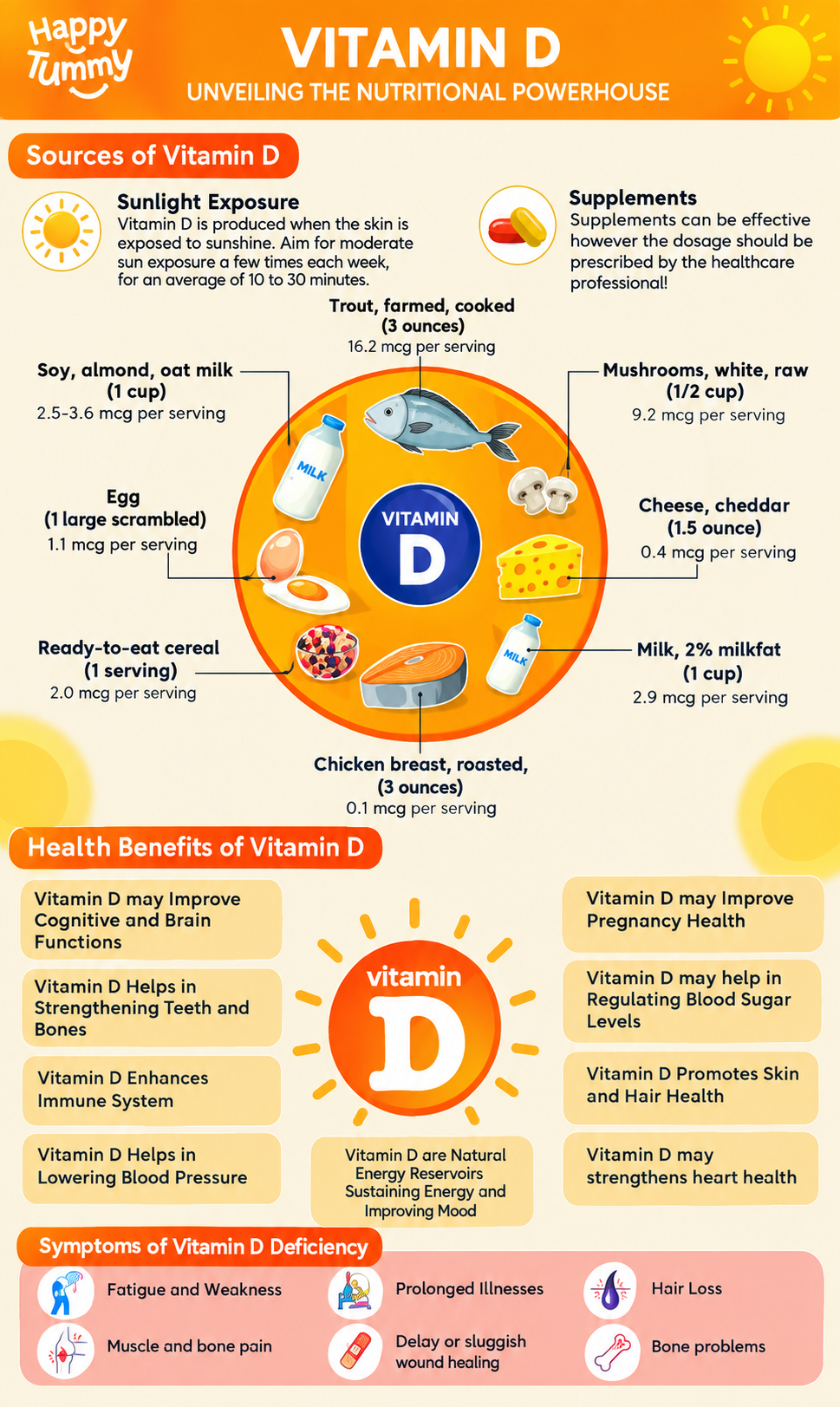
- Consumption of vitamin D-rich foods
- Management of underlying health conditions
- Foods Rich in Vitamin D
- Fatty fish such as salmon, tuna, and mackerel
- Egg yolks
- Fortified milk and dairy products
- Fortified cereals
- Mushrooms exposed to sunlight
Prevention
- Get regular sunlight exposure
- Maintain a balanced diet rich in vitamin D
- Exercise regularly
- Follow your doctor's advice regarding supplements
Conclusion
Vitamin D deficiency is a common but preventable condition that can affect bone health, muscle strength, and overall well-being. Early diagnosis and proper treatment can help maintain healthy vitamin D levels and reduce the risk of complications.
"Sunlight, nutrition, and healthy habits are the keys to maintaining optimal vitamin D levels and stronger bones."
AI GENERATED
Verified and approved by
Siddiq nisha U. Bsc(Nsg)
Karthikeyan S. MBBS.,