0%
Reading Progress
Scroll to track your progress
CABG (Coronary Artery Bypass Grafting)
What is CABG?
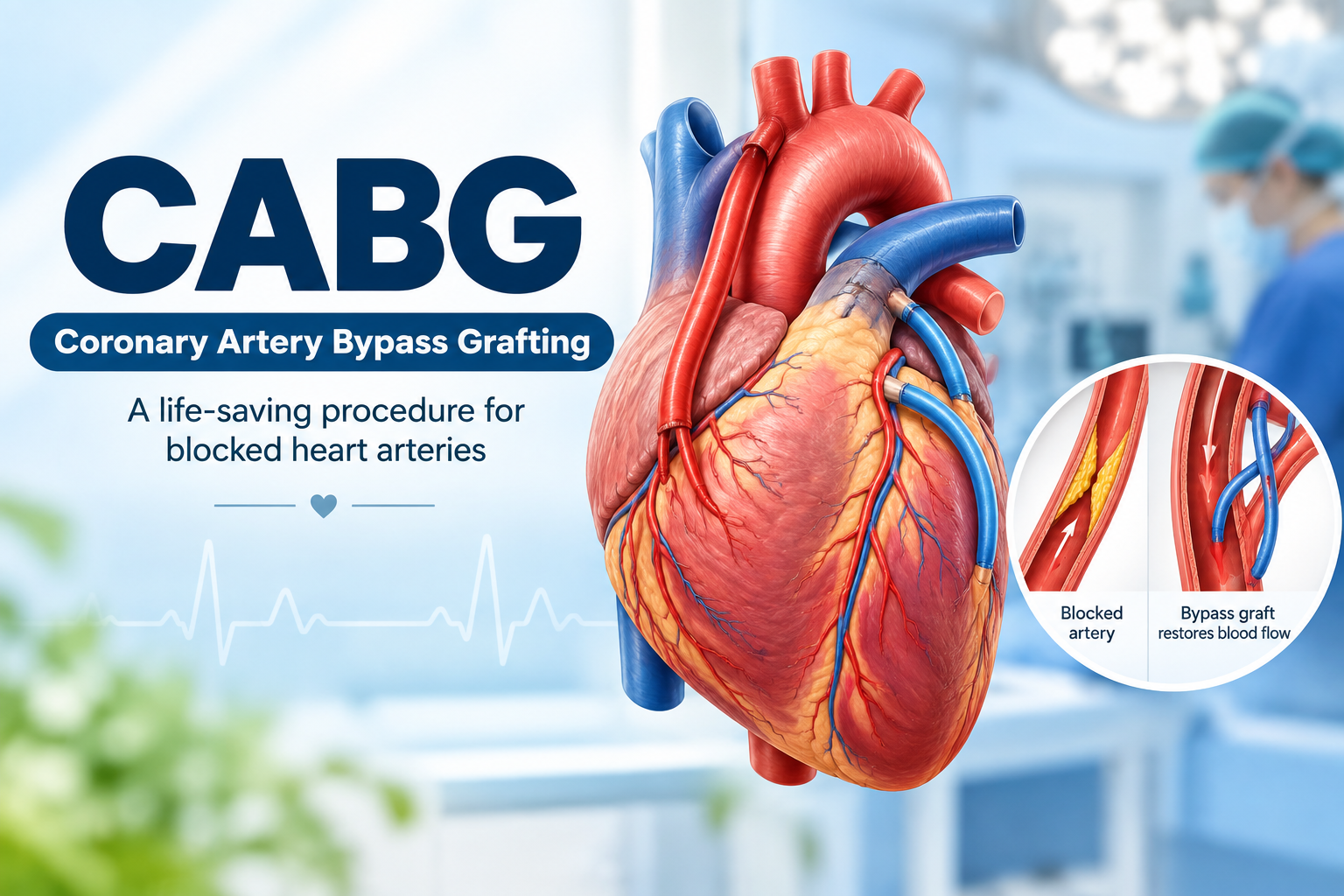
Coronary Artery Bypass Grafting (CABG), commonly known as heart bypass surgery, is a surgical procedure used to improve blood flow to the heart muscle. It is performed when one or more coronary arteries become narrowed or blocked due to the buildup of fatty deposits (plaque), a condition known as Coronary Artery Disease (CAD).
During CABG, a healthy blood vessel from another part of the body is used to create a new pathway (bypass) around the blocked artery, allowing oxygen-rich blood to reach the heart muscle.
Why is CABG Needed?
Your doctor may recommend CABG if you have:
Severe blockage in one or more coronary arteries
Chest pain (angina) that does not improve with medications
Multiple blocked heart arteries
Reduced blood flow to the heart muscle
Heart attack caused by blocked coronary arteries
Coronary artery disease not suitable for angioplasty or stenting
Symptoms of Coronary Artery Disease
Common symptoms that may indicate coronary artery disease include:
Chest pain or pressure
Shortness of breath
Fatigue
Pain in the neck, jaw, shoulder, or arm
Dizziness or lightheadedness
Heart palpitations
Some individuals may have no symptoms until a heart attack occurs.
How is CABG Performed?
The procedure is performed under general anesthesia and typically involves the following steps:
A healthy blood vessel is taken from the leg, arm, or chest.
The surgeon creates a bypass around the blocked coronary artery.
Blood flow is restored to the heart muscle through the new pathway.
Depending on the number of blocked arteries, a patient may require a single, double, triple, or quadruple bypass.
The surgery usually takes several hours and requires hospitalization.
Benefits of CABG
Improves blood flow to the heart
Reduces chest pain (angina)
Lowers the risk of future heart attacks
Improves quality of life
Helps patients return to daily activities
May increase survival in certain high-risk patients
Recovery After CABG
Recovery varies from person to person, but generally includes:
Hospital stay of about 5–7 days
Gradual return to normal activities over several weeks
Cardiac rehabilitation program
Taking prescribed medications regularly
Following a heart-healthy diet
Regular follow-up with a cardiologist
Most patients can resume normal daily activities within 6–12 weeks, depending on their overall health.
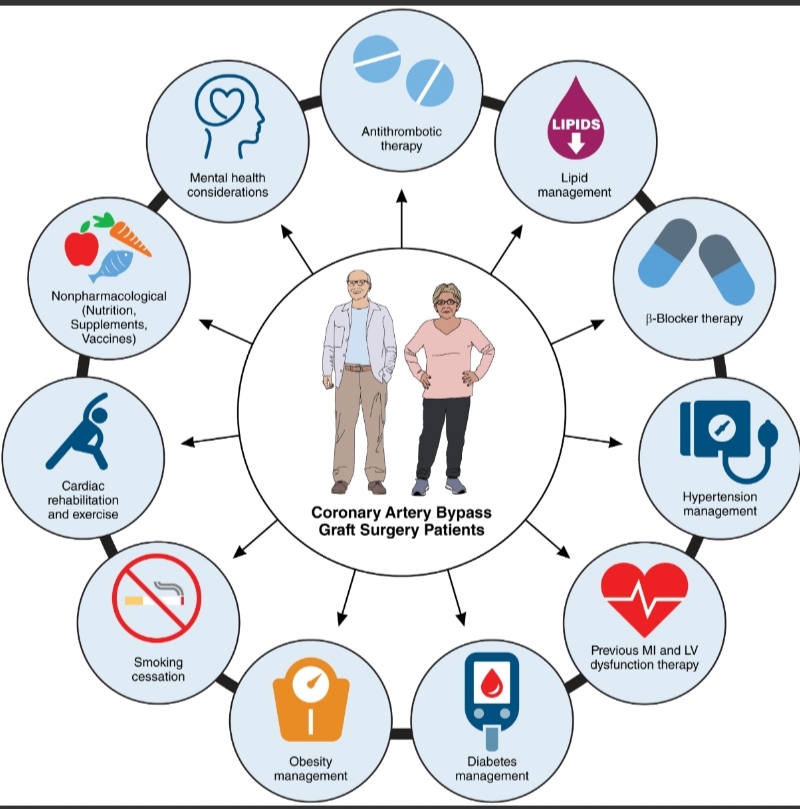
Lifestyle Changes After CABG
To maintain heart health after surgery:
Stop smoking
Eat a balanced, heart-healthy diet
Exercise regularly as advised by your doctor
Maintain a healthy weight
Control blood pressure, diabetes, and cholesterol
Manage stress effectively
Frequently Asked Questions (FAQ)
1. Is CABG a major surgery?
Yes. CABG is a major heart surgery performed by a cardiothoracic surgeon.
2. How long does a bypass graft last?
Many bypass grafts can function well for 10–20 years or longer, depending on lifestyle and overall health.
3. Can blocked arteries return after CABG?
New blockages can develop over time if risk factors such as smoking, diabetes, and high cholesterol are not controlled.
4. Is CABG better than angioplasty?
The choice depends on the number and location of blockages, overall heart function, and the patient's condition. Your cardiologist will recommend the most suitable treatment.
5. Can I live a normal life after CABG?
Many patients return to an active and productive life after recovery, especially when they follow a healthy lifestyle and medical advice.
Conclusion
Coronary Artery Bypass Grafting (CABG) is a well-established surgical procedure that helps restore blood flow to the heart in patients with severe coronary artery disease. Early diagnosis, appropriate treatment, and healthy lifestyle changes can significantly improve long-term heart health and quality of life.
Secondary prevention after CABG surgery
AI GENERATED
Verified and Approved by
Siddiq nisha U. Bsc(Nsg)
Dr.Karthikeyan S. MBBS.,