0%
Reading Progress
Scroll to track your progress
Stroke (Cerebrovascular Accident - CVA)
What is a Stroke?
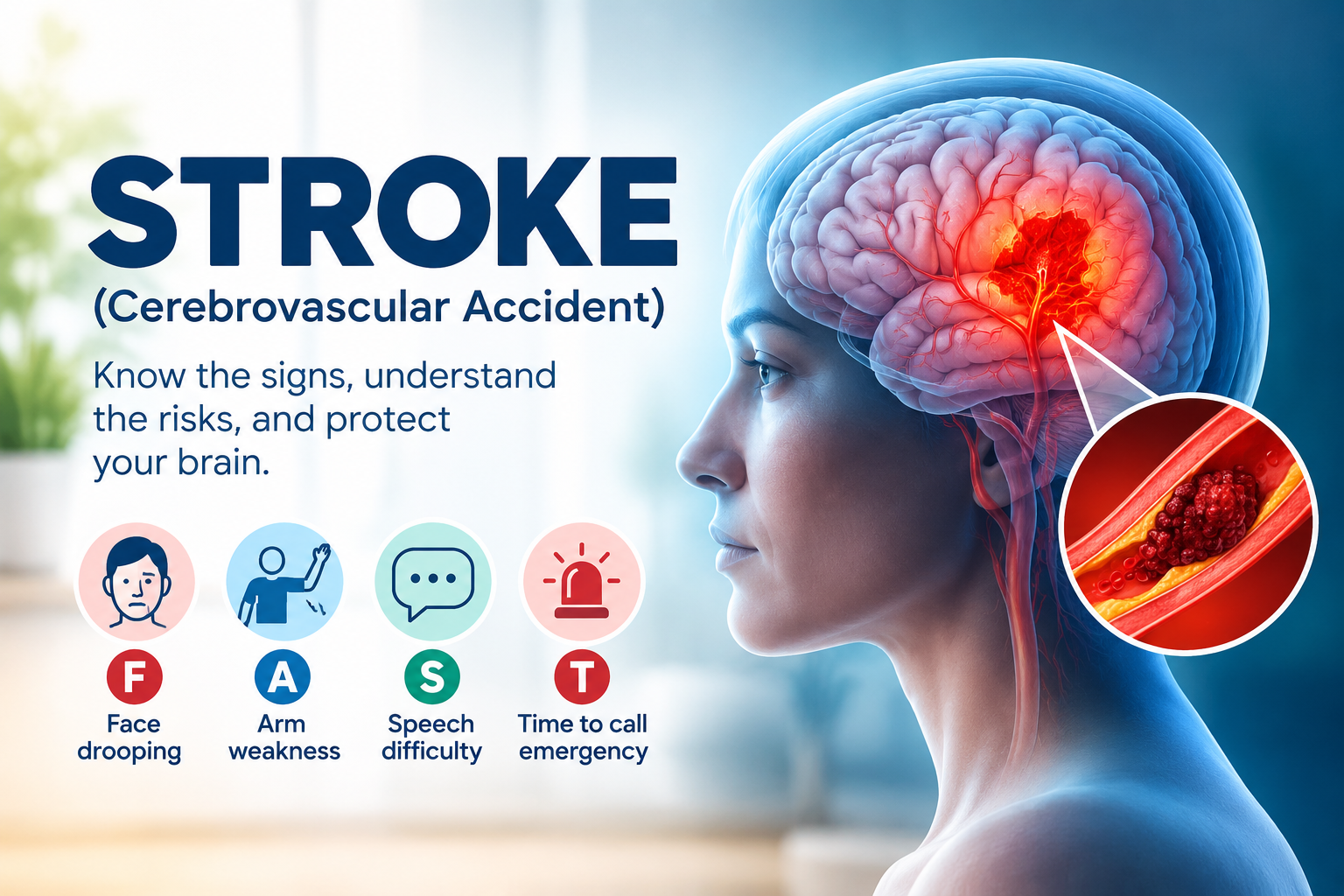
A stroke, medically known as a Cerebrovascular Accident (CVA), occurs when the blood supply to a part of the brain is interrupted or reduced, preventing brain tissue from receiving oxygen and nutrients. Brain cells begin to die within minutes, making stroke a medical emergency that requires immediate treatment.
Types of Stroke
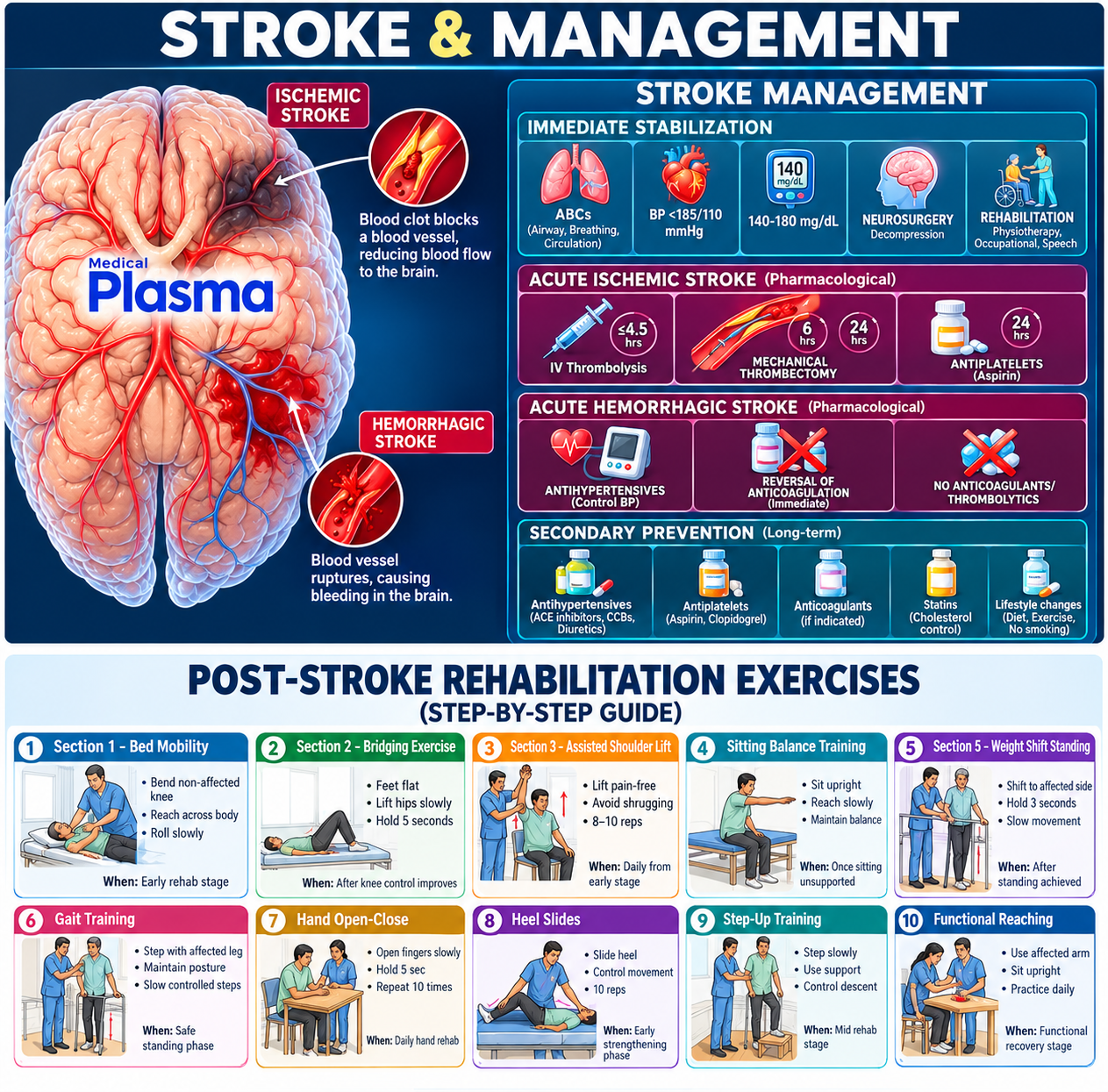
1. Ischemic Stroke
The most common type of stroke.
Occurs when a blood vessel supplying the brain becomes blocked by a clot.
2. Hemorrhagic Stroke
Occurs when a blood vessel in the brain ruptures and causes bleeding.
3. Transient Ischemic Attack (TIA)
Often called a "mini-stroke."
Causes temporary symptoms and serves as a warning sign for a future stroke.
Causes of Stroke
- High blood pressure (Hypertension)
- Diabetes
- High cholesterol
- Heart diseases
- Smoking
- Obesity
- Excessive alcohol consumption
- Physical inactivity
Symptoms of Stroke
Remember the acronym FAST:
F – Face drooping: One side of the face may droop or feel numb.
A – Arm weakness: Difficulty lifting one arm.
S – Speech difficulty: Slurred speech or difficulty speaking.
T – Time to call emergency services: Immediate medical attention is crucial.
Other symptoms may include:
- Sudden severe headache
- Dizziness or loss of balance
- Sudden confusion
- Vision problems in one or both eyes
- Numbness or weakness on one side of the body
Risk Factors
- Age above 55 years
- Family history of stroke
- High blood pressure
- Diabetes
- Smoking
- High cholesterol
- Obesity
- Sedentary lifestyle
Diagnosis
Doctors may use:
- CT Scan
- MRI Scan
- Blood Tests
- Carotid Ultrasound
- Electrocardiogram (ECG)
Treatment
Treatment depends on the type of stroke:
For Ischemic Stroke:
Clot-busting medications (Thrombolytics)
Mechanical thrombectomy (clot removal procedure)
For Hemorrhagic Stroke:
Medications to control bleeding
Surgery if necessary
Prevention
- Control blood pressure, diabetes, and cholesterol
- Exercise regularly
- Eat a healthy diet
- Avoid smoking and excessive alcohol
- Maintain a healthy weight
- Take prescribed medications regularly
Complications
- Paralysis or muscle weakness
- Speech and language difficulties
- Memory problems
- Swallowing difficulties
- Emotional and behavioral changes
Frequently Asked Questions (FAQs)
1. Can stroke be prevented?
Yes. Managing blood pressure, diabetes, cholesterol, and maintaining a healthy lifestyle can greatly reduce the risk.
2. Is stroke hereditary?
A family history of stroke may increase your risk, but lifestyle factors also play a major role.
3. What should I do if someone has stroke symptoms?
Seek emergency medical attention immediately. Early treatment can save brain function and lives.
4. Can young adults have a stroke?
Yes. Although more common in older adults, strokes can occur at any age.
5. How long does stroke recovery take?
Recovery varies depending on the severity of the stroke and the individual's overall health. Some recover within weeks, while others may require months or years of rehabilitation
Conclusion
Stroke is a serious medical emergency that can lead to long-term disability or death if not treated promptly. Recognizing the warning signs early and seeking immediate medical care can significantly improve recovery and outcomes.
AI GENERATED
Verified and approved by
Siddiq nisha U. Bsc (Nsg)
Dr Karthikeyan S. MBBS.,