0%
Reading Progress
Scroll to track your progress
Varicose Veins
What Are Varicose Veins?
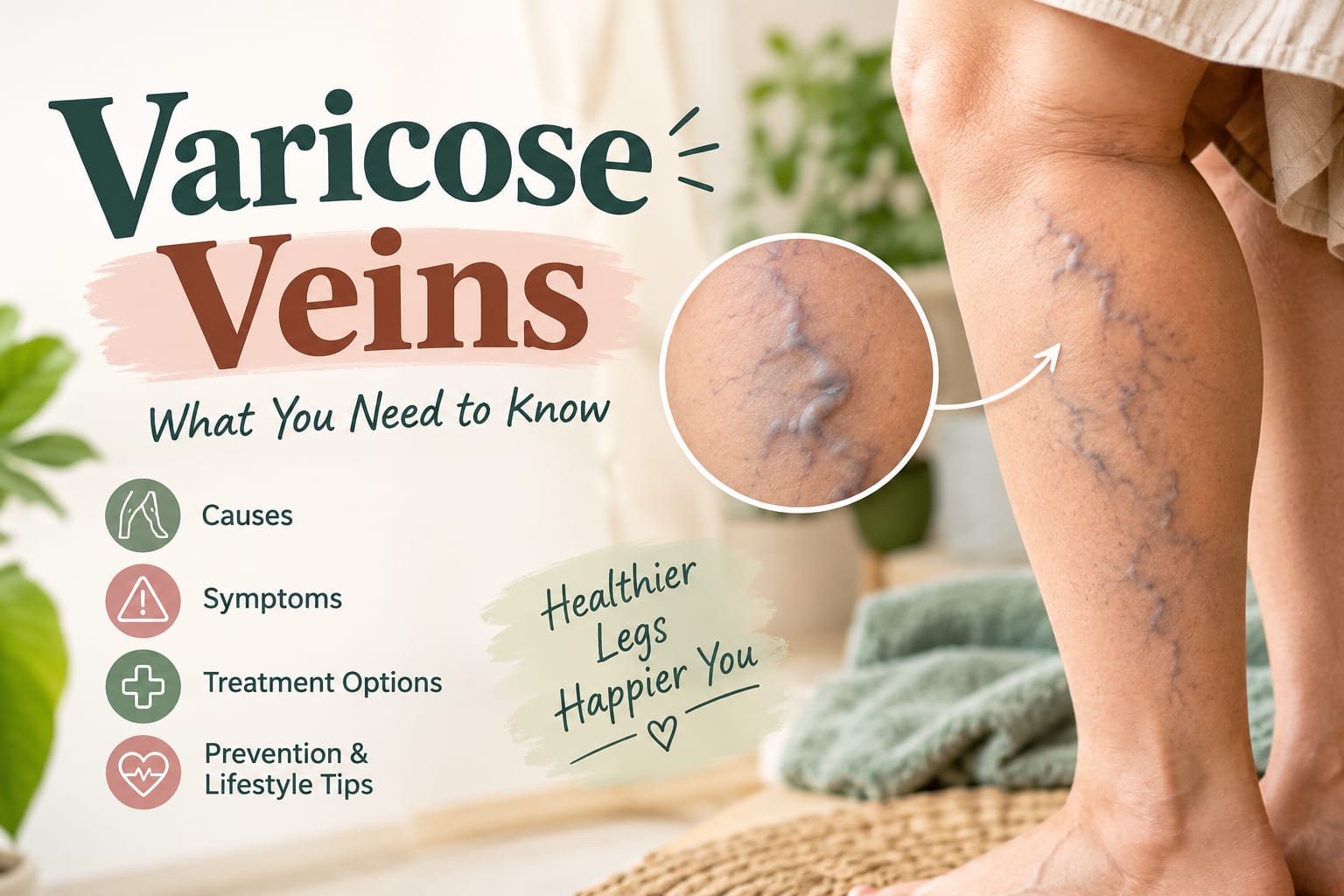
Varicose veins are enlarged, twisted, and swollen veins that usually appear on the legs and feet. They develop when the valves inside the veins become weak or damaged, causing blood to pool instead of flowing properly back to the heart. This condition is medically known as Varicosities or Varicose Vein Disease.
Causes of Varicose Veins
Several factors can increase the risk of developing varicose veins:
Prolonged standing or sitting
Increasing age
Family history of varicose veins
Obesity or excess body weight
Pregnancy
Lack of physical activity
Hormonal changes
Previous leg injury or blood clots
Symptoms of Varicose Veins
Common symptoms include:
Visible blue or dark purple veins
Bulging, twisted veins on the legs
Leg pain or aching
Heaviness in the legs
Swelling of the ankles and feet
Muscle cramps, especially at night
Itching around the affected veins
Burning or throbbing sensation
Symptoms that worsen after prolonged standing
Risk Factors
You may be at higher risk if you:
Are over 40 years of age
Have a family history of varicose veins
Are overweight or obese
Are pregnant
Have a job that requires long periods of standing
Diagnosis
A doctor may diagnose varicose veins through:
Physical examination
Medical history review
Doppler Ultrasound Scan to assess blood flow and valve function
Treatment Options
Treatment depends on the severity of the condition.
1. Lifestyle Changes
Regular walking and exercise
Weight management
Avoiding prolonged standing or sitting
Elevating the legs while resting
2. Compression Stockings
These help improve blood circulation and reduce swelling.
3. Sclerotherapy
A special solution is injected into small varicose veins, causing them to close and fade.
4. Laser Treatment
Laser energy is used to close affected veins without surgery.
5. Endovenous Ablation
A minimally invasive procedure using laser or radiofrequency energy to seal damaged veins.
6. Surgery
In severe cases, surgical removal of affected veins may be recommended.
Possible Complications
If left untreated, varicose veins may lead to:
Leg ulcers
Skin discoloration
Chronic swelling
Bleeding from veins
Blood clots (Thrombophlebitis)
Prevention Tips
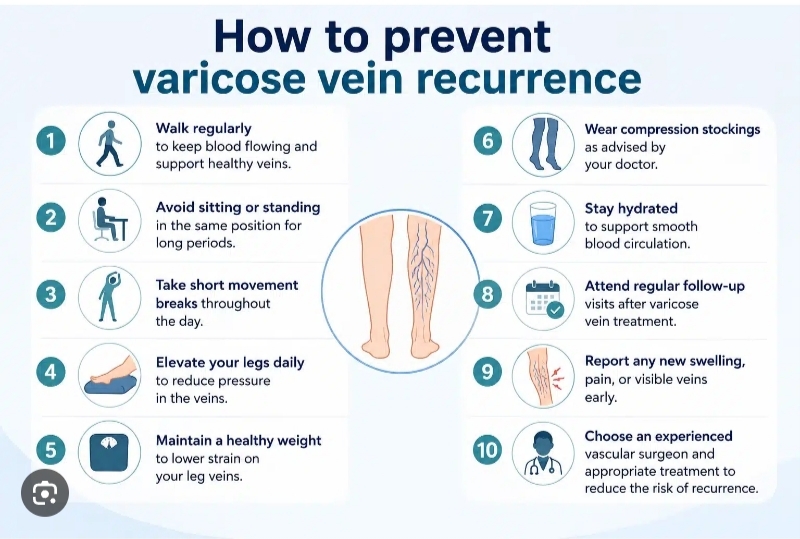
Stay physically active
Maintain a healthy weight
Avoid sitting or standing for long periods
Elevate your legs when resting
Wear comfortable footwear
Use compression stockings if advised by your doctor
When Should You See a Doctor?
Consult a healthcare professional if you experience:
Persistent leg pain or swelling
Skin changes around the veins
Non-healing leg wounds
Sudden redness, warmth, or tenderness in the leg
Bleeding from a varicose vein
Conclusion
Varicose veins are a common condition that can affect both appearance and quality of life. Early diagnosis and appropriate treatment can help relieve symptoms, improve circulation, and prevent complications. If you notice swollen or twisted veins in your legs, seek medical advice for proper evaluation and treatment.
AI GENERATED
Verified and approved by
Siddiq nisha U. Bsc(Nsg)
Dr.Karthikeyan S. MBBS.,