0%
Reading Progress
Scroll to track your progress
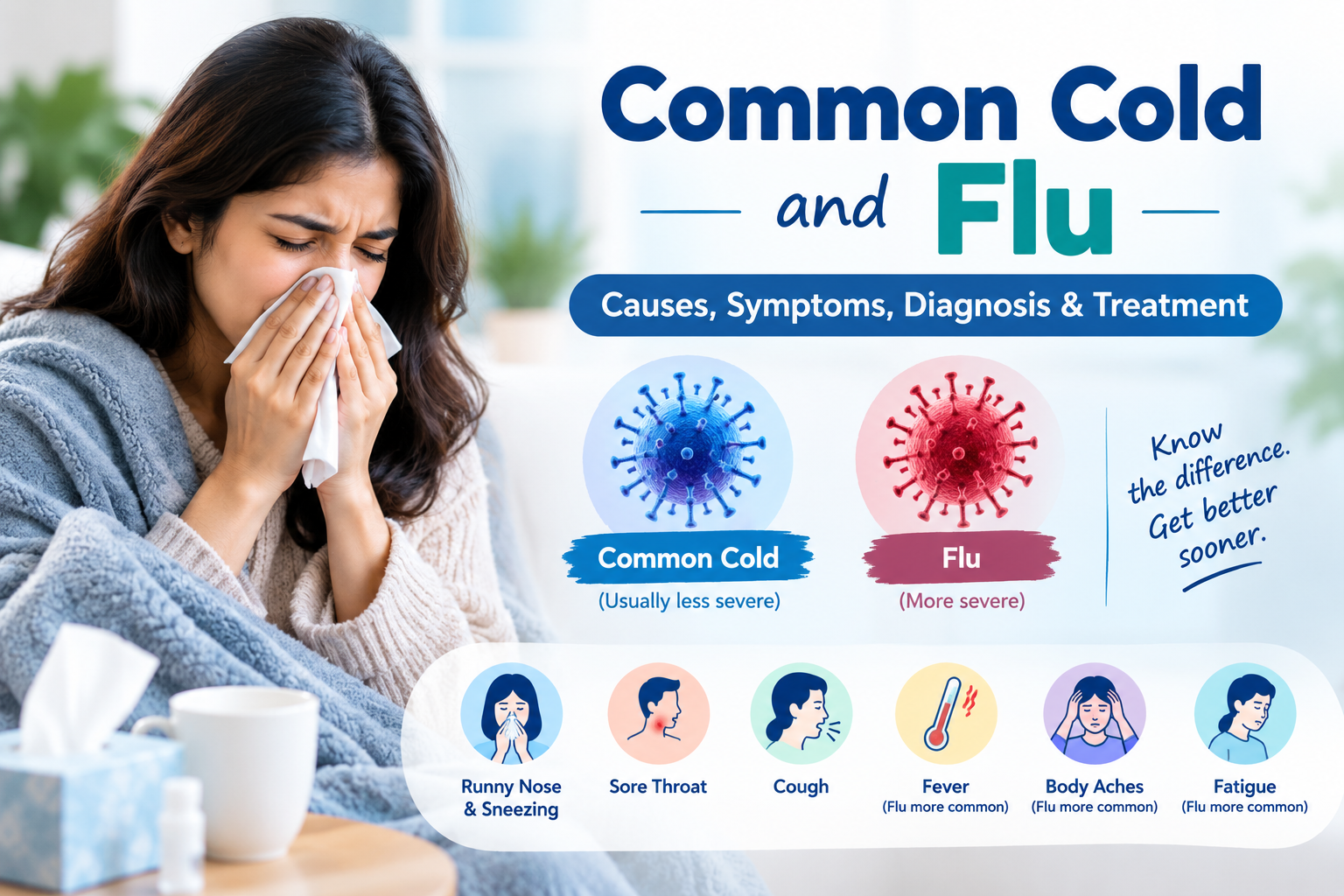
Common Cold and Flu
What are Common Cold and Flu?
The Common Cold and Flu (Influenza) are viral respiratory infections that affect the nose, throat, and airways. Although they share similar symptoms, the flu is generally more severe and can lead to complications, especially in young children, older adults, pregnant women, and people with weakened immune systems.
What Causes Common Cold and Flu?
Common Cold
The common cold is usually caused by viruses such as:
Rhinoviruses
Coronaviruses (non-COVID types)
Respiratory Syncytial Virus (RSV)
Flu (Influenza)
Flu is caused by:
Influenza A virus
Influenza B virus
These viruses spread through:
Coughing and sneezing
Close contact with infected individuals
Touching contaminated surfaces and then touching the face
Symptoms of Common Cold
Runny or stuffy nose
Sneezing
Sore throat
Mild cough
Mild headache
Watery eyes
Low-grade fever (occasionally)
Symptoms of Flu (Influenza)
Sudden onset of fever
Chills
Severe body aches
Fatigue and weakness
Dry cough
Headache
Sore throat
Runny or stuffy nose
How are Common Cold and Flu Diagnosed?
Diagnosis may include:
Medical history
Physical examination
Rapid influenza tests (for suspected flu)
Laboratory testing in selected cases
Treatment
Home Care Measures
Get adequate rest
Drink plenty of fluids
Eat nutritious foods
Use warm salt-water gargles for sore throat
Use steam inhalation if recommended
Medications
Fever and pain-relieving medications
Cough and cold medications (as advised)
Antiviral medicines may be prescribed for influenza in certain cases
Antibiotics do not treat viral infections such as the common cold or flu unless a bacterial infection is also present.
Prevention Tips
Wash hands frequently
Cover your mouth and nose when coughing or sneezing
Avoid close contact with sick individuals
Avoid touching your face with unwashed hands
Maintain a healthy lifestyle
Get the annual flu vaccine if recommended
When Should You See a Doctor?
Seek medical attention if you experience:
Difficulty breathing
Persistent high fever
Chest pain
Severe dehydration
Symptoms lasting longer than expected
Worsening symptoms after initial improvement
Frequently Asked Questions (FAQs)
1. Is the common cold the same as the flu?
No. Both are viral infections, but the flu is usually more severe and can cause serious complications.
2. Can antibiotics cure a cold or flu?
No. Antibiotics work against bacteria, not viruses.
3. How long does a common cold last?
Most colds improve within 7–10 days.
4. How long does flu last?
Flu symptoms usually last 1–2 weeks, though fatigue may continue longer.
5. Can flu be prevented?
Annual influenza vaccination and good hygiene practices can significantly reduce the risk of flu infection.
Conclusion
Common cold and flu are common viral respiratory illnesses that can cause discomfort and affect daily activities. While most cases improve with rest and supportive care, recognizing severe symptoms and seeking timely medical attention can help prevent complications and promote a faster recovery.
AI GENERATED
Verified and approved by
Siddiq nisha U. Bsc (Nsg)
Dr.Karthikeyan S. MBBS.,