0%
Reading Progress
Scroll to track your progress
Typhoid Fever
What is Typhoid Fever?
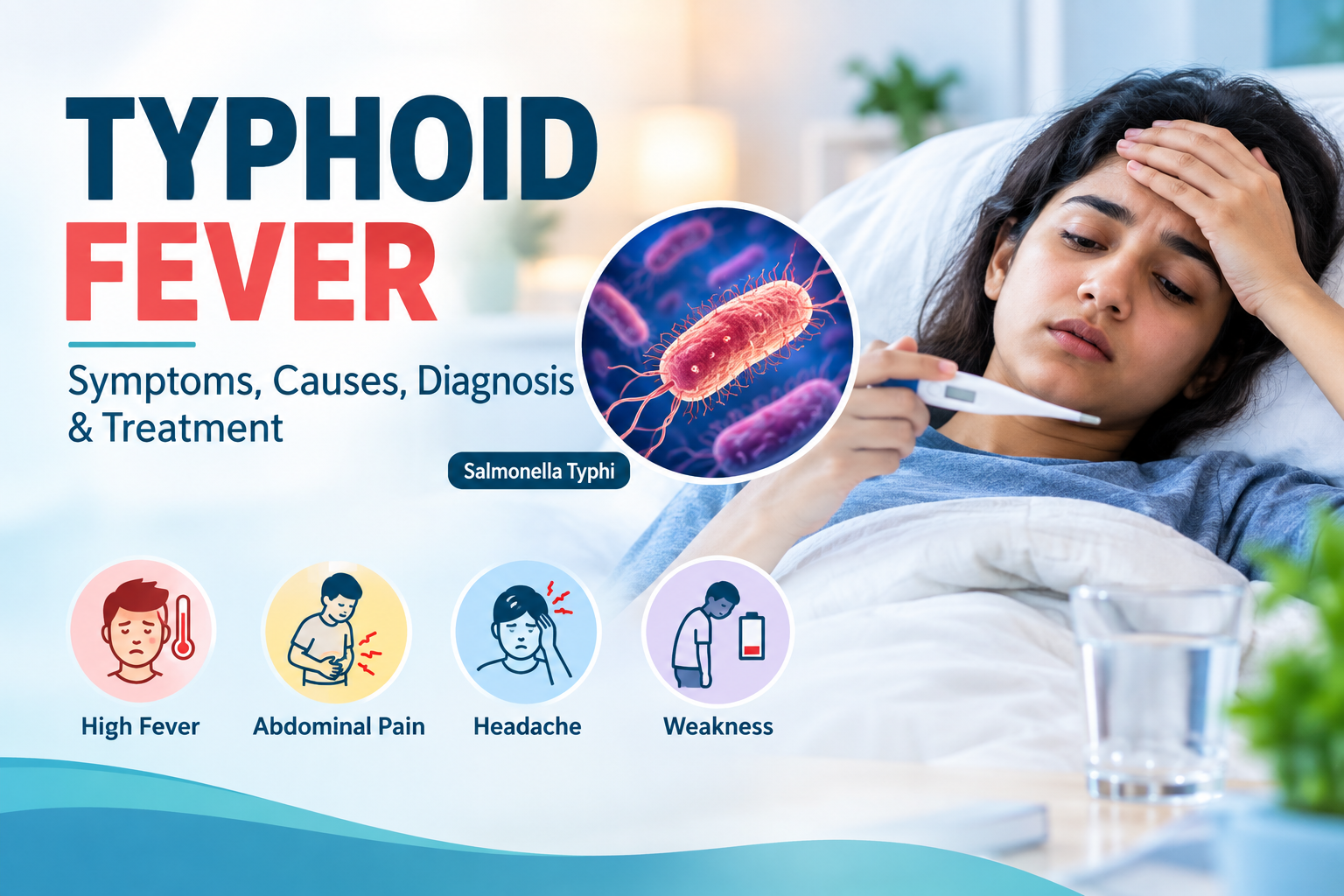
Typhoid fever (Enteric Fever) is a bacterial infection caused by Salmonella enterica serotype Typhi (Salmonella Typhi). It spreads through contaminated food and water and is more common in areas with poor sanitation and limited access to clean drinking water. If not treated promptly, typhoid fever can lead to serious complications affecting multiple organs.
Causes of Typhoid Fever
Typhoid fever is caused by the bacterium Salmonella Typhi. The infection spreads through:
Drinking contaminated water
Eating food prepared by an infected person
Poor hand hygiene
Consuming food from unhygienic sources
Close contact with an infected individual
Symptoms of Typhoid Fever
Symptoms usually develop 1–3 weeks after exposure and may include:
Persistent high fever
Headache
Weakness and fatigue
Loss of appetite
Abdominal pain
Nausea and vomiting
Diarrhea or constipation
Muscle aches
Dry cough
Enlarged liver or spleen
Rose-colored rash (in some patients)
Risk Factors
The risk of developing typhoid fever increases with:
Poor sanitation and hygiene
Drinking unsafe water
Traveling to typhoid-endemic regions
Eating contaminated street food
Living in overcrowded conditions
Diagnosis
A healthcare provider may diagnose typhoid fever through:
Blood culture
Stool culture
Urine culture
Complete Blood Count (CBC)
Other laboratory tests as needed
Treatment
Treatment typically includes:
Antibiotic medications prescribed by a doctor
Adequate fluid intake to prevent dehydration
Proper nutrition and rest
Hospitalization in severe cases
It is important to complete the full course of antibiotics even if symptoms improve.
Possible Complications
If left untreated, typhoid fever can cause:
Intestinal bleeding
Intestinal perforation
Severe dehydration
Bloodstream infection (sepsis)
Meningitis (rare)
Multi-organ complications
Prevention
You can reduce the risk of typhoid fever by:
Washing hands regularly with soap and water
Drinking clean, boiled, or purified water
Eating freshly cooked food
Avoiding raw or undercooked foods
Maintaining good personal hygiene
Receiving typhoid vaccination when recommended
When Should You See a Doctor?
Seek medical attention if you experience:
Persistent fever lasting more than a few days
Severe abdominal pain
Continuous vomiting
Signs of dehydration
Extreme weakness or confusion
Conclusion
Typhoid fever is a serious but preventable bacterial infection. Early diagnosis, timely treatment, proper hygiene practices, and safe food and water consumption are essential for preventing complications and ensuring a full recovery. If you suspect typhoid fever, consult a healthcare professional without delay.
AI GENERATED
Verified and approved by
Ms.Siddiq nisha U. Bsc (Nsg)
Dr.Karthikeyan S. MBBS.,