0%
Reading Progress
Scroll to track your progress
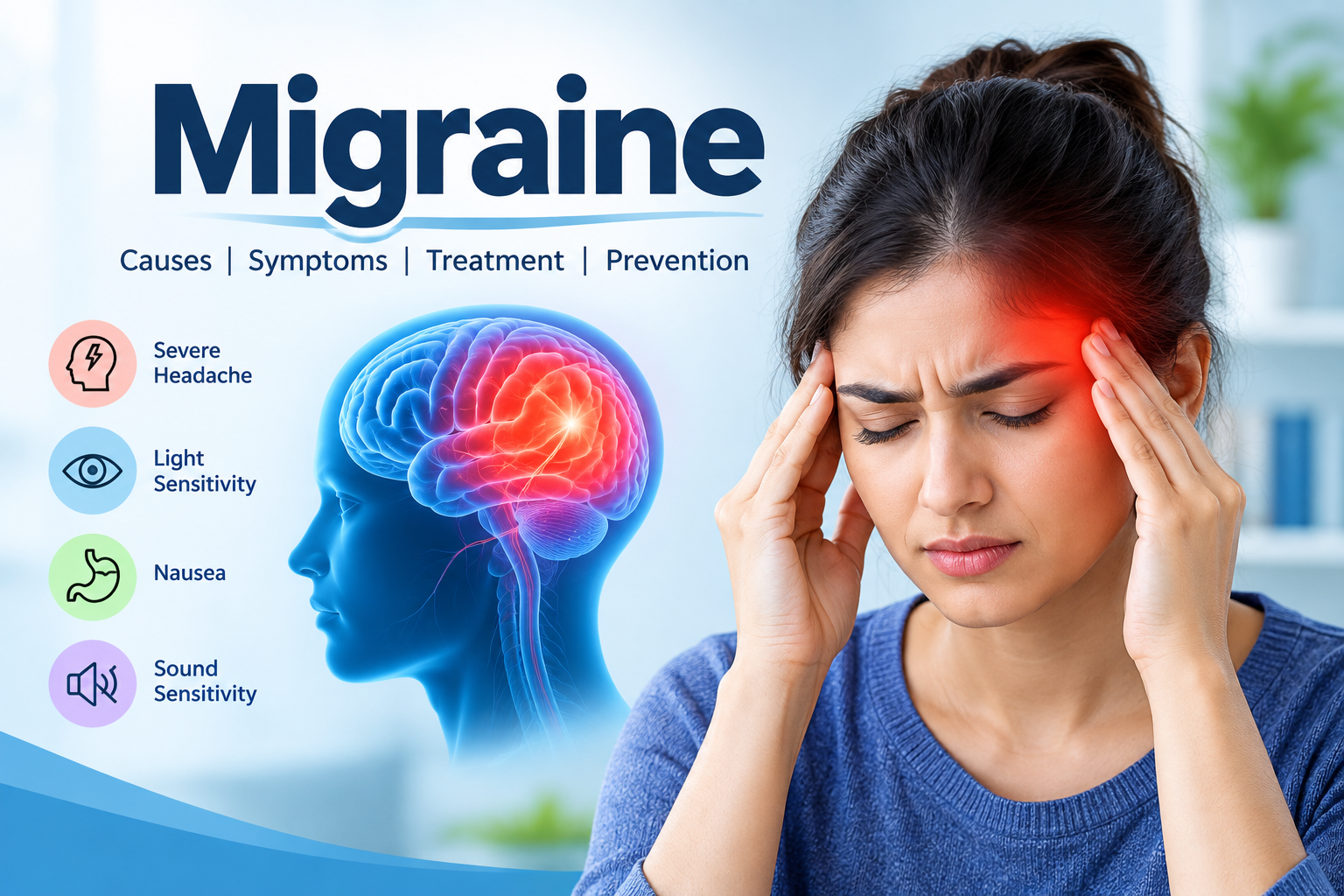
Introduction Migraine is a common neurological condition that causes recurrent headaches, often accompanied by symptoms such as nausea, vomiting, and sensitivity to light and sound. Migraine attacks can last for hours or even days and may significantly affect daily activities and quality of life. Early diagnosis and proper management can help reduce the frequency and severity of migraine episodes.
What is a Migraine?
A migraine is more than just a headache. It is a neurological disorder characterized by intense, throbbing pain, usually on one side of the head. Some people experience warning signs known as an "aura" before the headache begins.
Types of Migraine
1. Migraine Without Aura
The most common type, causing moderate to severe headache without warning symptoms.
2. Migraine With Aura
Occurs with visual disturbances such as flashing lights, blind spots, or tingling sensations before the headache starts.
3. Chronic Migraine
Headaches occur on 15 or more days per month for at least three months.
4. Hemiplegic Migraine
A rare type that causes temporary weakness on one side of the body.
Causes and Triggers of Migraine
The exact cause of migraine is not fully understood, but several factors can trigger an attack:
Stress and anxiety
Lack of sleep or irregular sleep patterns
Hormonal changes
Skipping meals
Dehydration
Bright lights or loud noises
Strong odors
Weather changes
Certain foods and beverages such as chocolate, caffeine, processed foods, and alcohol
Symptoms of Migraine
Common symptoms include:
Throbbing or pulsating headache
Pain on one or both sides of the head
Nausea and vomiting
Sensitivity to light, sound, or smells
Blurred vision
Dizziness
Fatigue
Difficulty concentrating
How is Migraine Diagnosed?
Doctors diagnose migraine based on:
Medical history
Symptom assessment
Physical and neurological examination
In some cases, imaging tests such as CT scans or MRI scans may be recommended to rule out other causes of headaches.
Treatment for Migraine
Medications
Pain relievers
Anti-nausea medications
Triptans
Preventive medications for frequent migraines
Lifestyle Modifications
Maintain a regular sleep schedule
Stay hydrated
Eat meals on time
Exercise regularly
Manage stress through relaxation techniques
Prevention Tips
Identify and avoid personal migraine triggers
Keep a headache diary
Limit caffeine intake
Get adequate sleep
Practice yoga, meditation, or deep breathing exercises
Follow a healthy and balanced diet
When to See a Doctor
Seek medical attention if you experience:
Sudden severe headache
Headache after a head injury
Changes in vision or speech
Weakness or numbness
Frequent or worsening headaches
Headaches accompanied by fever or confusion
Conclusion
Migraine is a common but often disabling condition that can interfere with everyday life. Understanding your triggers, adopting healthy lifestyle habits, and seeking appropriate medical care can help manage symptoms effectively and improve overall well-being.
AI GENERATED
Verified and approved by
Ms.Siddiq nisha U. Bsc (Nsg)
Dr.karthikeyan S. MBBS.,