0%
Reading Progress
Scroll to track your progress
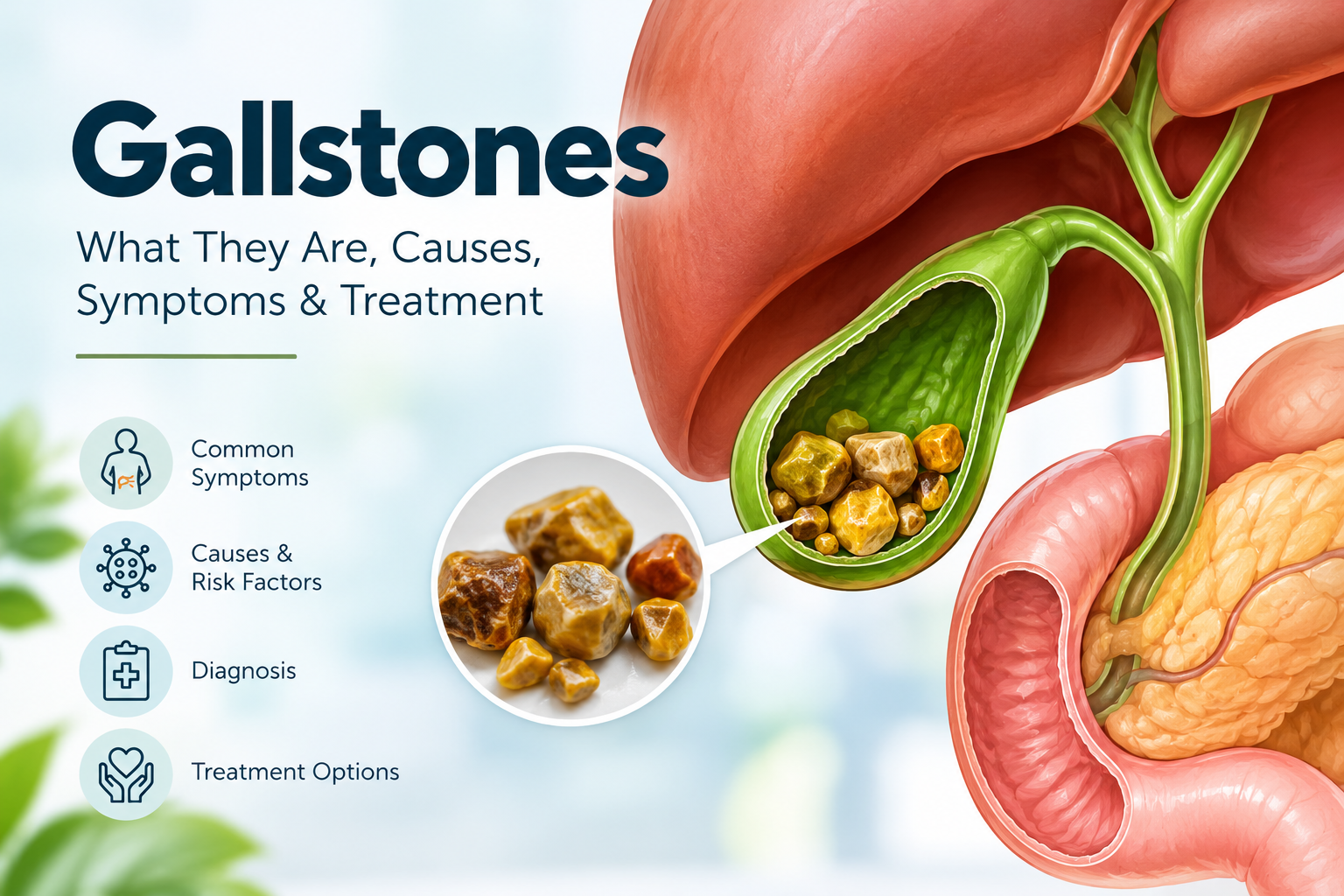
Introduction Gallstones are hard, stone-like deposits that develop inside the gallbladder. The gallbladder is a small, pear-shaped organ located beneath the liver. It stores and releases bile, a digestive fluid that helps the body digest fats. Gallstones can be as small as grains of sand or as large as a golf ball. Some people have gallstones without experiencing any symptoms, while others may develop severe abdominal pain and digestive problems when a stone blocks the bile ducts.
What Are Gallstones?
Gallstones, medically called cholelithiasis, are solid particles formed when substances present in bile, mainly cholesterol or bilirubin, become concentrated and crystallize inside the gallbladder.
There are two main types:
Cholesterol stones: The most common type, usually yellowish in colour.
Pigment stones: Usually dark brown or black and mainly associated with excess bilirubin in bile.
Causes of Gallstones
Gallstones may develop when:
Bile contains too much cholesterol.
The gallbladder does not empty properly.
There is excess bilirubin in the bile.
There is an imbalance in the substances that make up bile.
Risk Factors
The risk of developing gallstones may increase with:
Being overweight or having obesity
Rapid weight loss
A diet high in unhealthy fats
Pregnancy
Increasing age
Family history of gallstones
Certain liver or blood disorders
Diabetes
Certain medications
Symptoms of Gallstones
Many people with gallstones have no symptoms. These are called silent gallstones.
When a gallstone blocks a bile duct, symptoms may include:
Sudden pain in the upper right or upper middle abdomen
Pain after eating, particularly after fatty meals
Pain spreading to the back or right shoulder
Nausea and vomiting
Bloating or indigestion
Feeling unusually full
The pain may last from several minutes to a few hours.
When to Seek Medical Attention
Seek urgent medical care if abdominal pain is severe or is accompanied by:
Fever or chills
Yellowing of the skin or eyes (jaundice)
Persistent vomiting
Dark urine or pale stools
Severe or worsening abdominal pain
These symptoms may indicate complications such as cholecystitis, bile duct obstruction, or pancreatitis.
Diagnosis
Doctors may diagnose gallstones using:
Abdominal ultrasound – commonly used to detect gallstones.
Blood tests – may help identify inflammation or problems involving the liver and bile ducts.
CT scan or MRI/MRCP – may be recommended in selected cases.
ERCP (Endoscopic Retrograde Cholangiopancreatography) – may be used to diagnose and remove stones from the common bile duct in appropriate situations.
Treatment for Gallstones
Treatment depends on whether the gallstones are causing symptoms or complications.
1. Observation
Silent gallstones that are not causing symptoms often do not require immediate treatment.
2. Medications
Certain medicines can dissolve some cholesterol stones, but treatment may take a long time and is not suitable for everyone.
3. Surgery
For recurrent symptoms or complications, doctors may recommend laparoscopic cholecystectomy, a minimally invasive procedure to remove the gallbladder.
People can generally live normally without a gallbladder because bile can flow directly from the liver into the intestine.
4. ERCP
If stones are present in the common bile duct, ERCP may be used to remove them.
Can Gallstones Be Prevented?
Not all gallstones can be prevented, but some measures may help reduce the risk:
Maintain a healthy body weight.
Avoid crash diets and very rapid weight loss.
Eat a balanced diet rich in fibre.
Include healthy sources of fat in appropriate amounts.
Limit highly processed foods and excessive saturated fat.
Stay physically active.
Gallstones and Diet
If gallstones cause symptoms, some people may find that large or high-fat meals trigger pain. Smaller, balanced meals and limiting foods that consistently trigger symptoms may help. A healthcare professional can provide individualized dietary advice.
Conclusion
Gallstones are common and may not cause symptoms in many people. However, when a stone blocks the bile ducts, it can cause significant pain and complications. Recognizing warning symptoms and seeking timely medical evaluation can help prevent serious problems.
AI GENERATED
Verified and approved by
Ms. Siddiq nisha U. Bsc (Nsg)
Dr.Karthikeyan S. MBBS.,