0%
Reading Progress
Scroll to track your progress
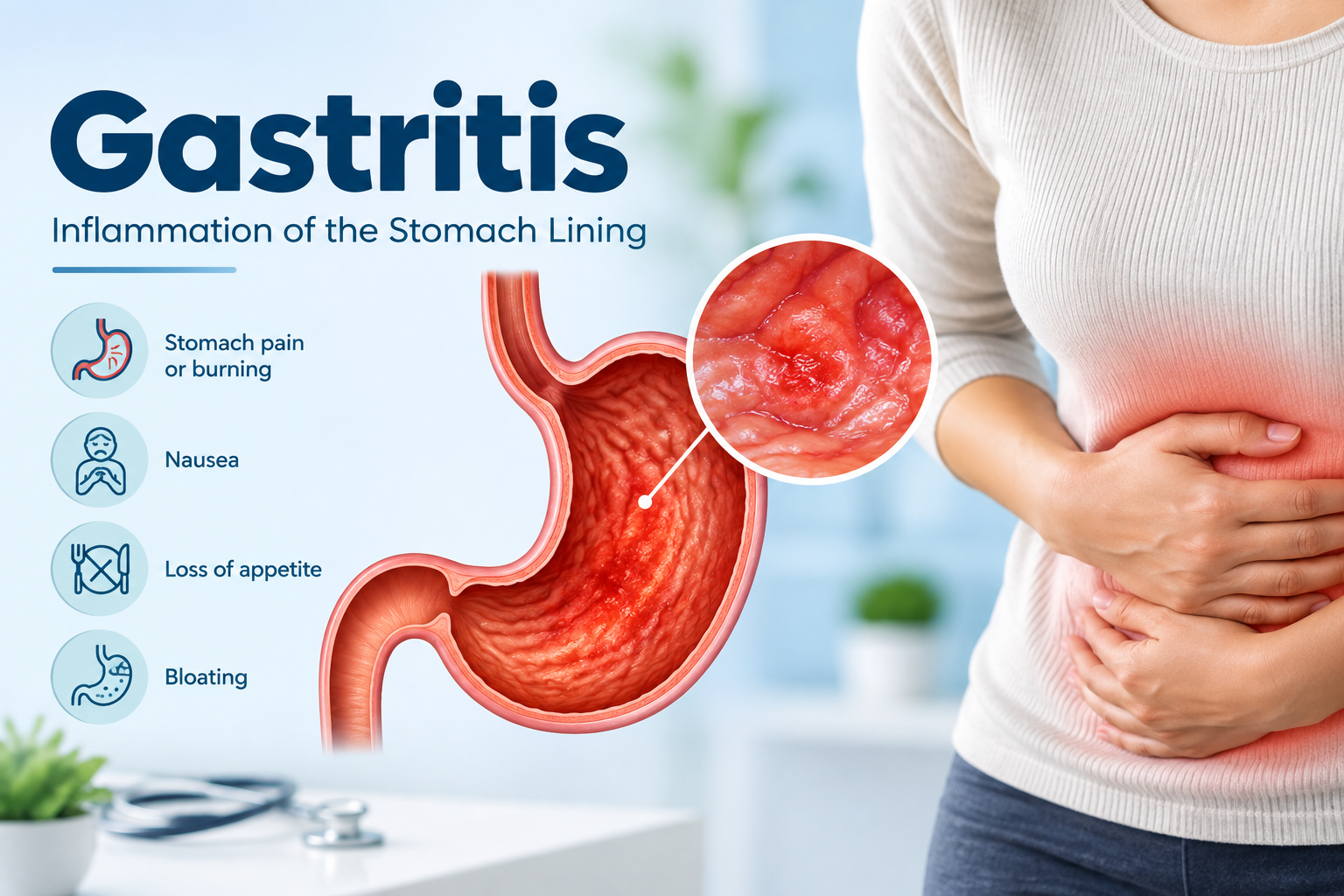
Introduction Gastritis is a condition in which the lining of the stomach becomes inflamed or irritated. It can develop suddenly (acute gastritis) or gradually over time (chronic gastritis). Gastritis may cause stomach discomfort, nausea, bloating, and indigestion. In some people, it may not cause any noticeable symptoms. Gastritis can have several causes, including infection with Helicobacter pylori (H. pylori), long-term use of certain painkillers, excessive alcohol consumption, and physical stress on the body.
What Is Gastritis?
Gastritis refers to inflammation of the stomach lining. Normally, the stomach lining has protective mechanisms that help prevent stomach acid from damaging the tissue. When this protection is weakened or the lining becomes irritated, inflammation can occur.
Types of Gastritis
1. Acute Gastritis
Acute gastritis develops suddenly and may improve once the underlying cause is treated or removed.
2. Chronic Gastritis
Chronic gastritis develops gradually and may continue for a long time. If left untreated in some cases, it can damage the stomach lining and lead to complications.
Causes of Gastritis
Common causes and risk factors include:
H. pylori infection
Long-term use of non-steroidal anti-inflammatory drugs (NSAIDs), such as ibuprofen or aspirin
Excessive alcohol consumption
Severe physical stress, such as serious illness, major surgery, or severe injury
Autoimmune conditions affecting the stomach
Bile reflux
Certain infections
Smoking may also increase the risk of stomach irritation
Symptoms of Gastritis
Symptoms can vary from person to person. Common symptoms include:
Upper abdominal pain or discomfort
Burning sensation in the stomach
Nausea or vomiting
Bloating
Indigestion
Feeling full quickly while eating
Loss of appetite
Frequent belching
Some people with gastritis may have no symptoms.
Warning Symptoms
Seek medical attention promptly if you experience:
Vomiting blood
Black, tarry stools
Severe or persistent abdominal pain
Repeated vomiting
Unexplained weight loss
Difficulty eating or swallowing
Persistent symptoms that do not improve
These symptoms can sometimes indicate bleeding or another serious gastrointestinal condition.
How Is Gastritis Diagnosed?
A healthcare professional may diagnose gastritis based on your symptoms, medical history, and physical examination.
Depending on the situation, tests may include:
H. pylori testing – breath test, stool test, or other appropriate testing
Blood tests
Stool tests, particularly when bleeding is suspected
Upper gastrointestinal endoscopy to examine the stomach lining
Biopsy during endoscopy when necessary
Treatment for Gastritis
Treatment depends on the underlying cause.
Medicines
Doctors may recommend medicines that reduce stomach acid or protect the stomach lining, depending on the diagnosis.
If H. pylori infection is present, treatment usually involves a combination of antibiotics and acid-suppressing medicines.
If gastritis is related to NSAID use, your doctor may recommend changing or stopping the medicine when appropriate and may prescribe treatment to protect the stomach.
Lifestyle and Dietary Measures
Helpful measures may include:
Eat smaller meals rather than very large meals.
Avoid foods that clearly worsen your symptoms.
Limit alcohol consumption.
Avoid smoking.
Avoid unnecessary use of NSAID painkillers.
Maintain a regular eating pattern.
Stay adequately hydrated.
Manage stress through adequate sleep, physical activity, relaxation techniques, or other healthy approaches.
There is no single diet that cures gastritis. Foods that trigger symptoms can vary between individuals.
Can Gastritis Be Prevented?
Some causes of gastritis cannot always be prevented, but the risk can be reduced by:
Using painkillers such as NSAIDs only as directed.
Avoiding excessive alcohol.
Not smoking.
Seeking medical evaluation for persistent stomach symptoms.
Testing and treating H. pylori when recommended by a healthcare professional.
Following prescribed treatment properly.
When Should You See a Doctor?
Consult a healthcare professional if stomach pain, indigestion, nausea, or other digestive symptoms are persistent, recurrent, or interfering with daily activities.
Seek urgent medical care if you have vomiting blood, black stools, severe abdominal pain, fainting, or other signs of significant bleeding.
Conclusion
Gastritis is inflammation of the stomach lining that can result from infections, medications, alcohol, autoimmune conditions, and other factors. Recognizing persistent symptoms and identifying the underlying cause are important for effective treatment. With appropriate medical care and lifestyle changes, many people can manage or resolve their symptoms.
AI GENERATED
Verified and approved by
Ms. Siddiq nisha U. Bsc( Nsg)
Dr. Karthikeyan S. MBBS.,