0%
Reading Progress
Scroll to track your progress
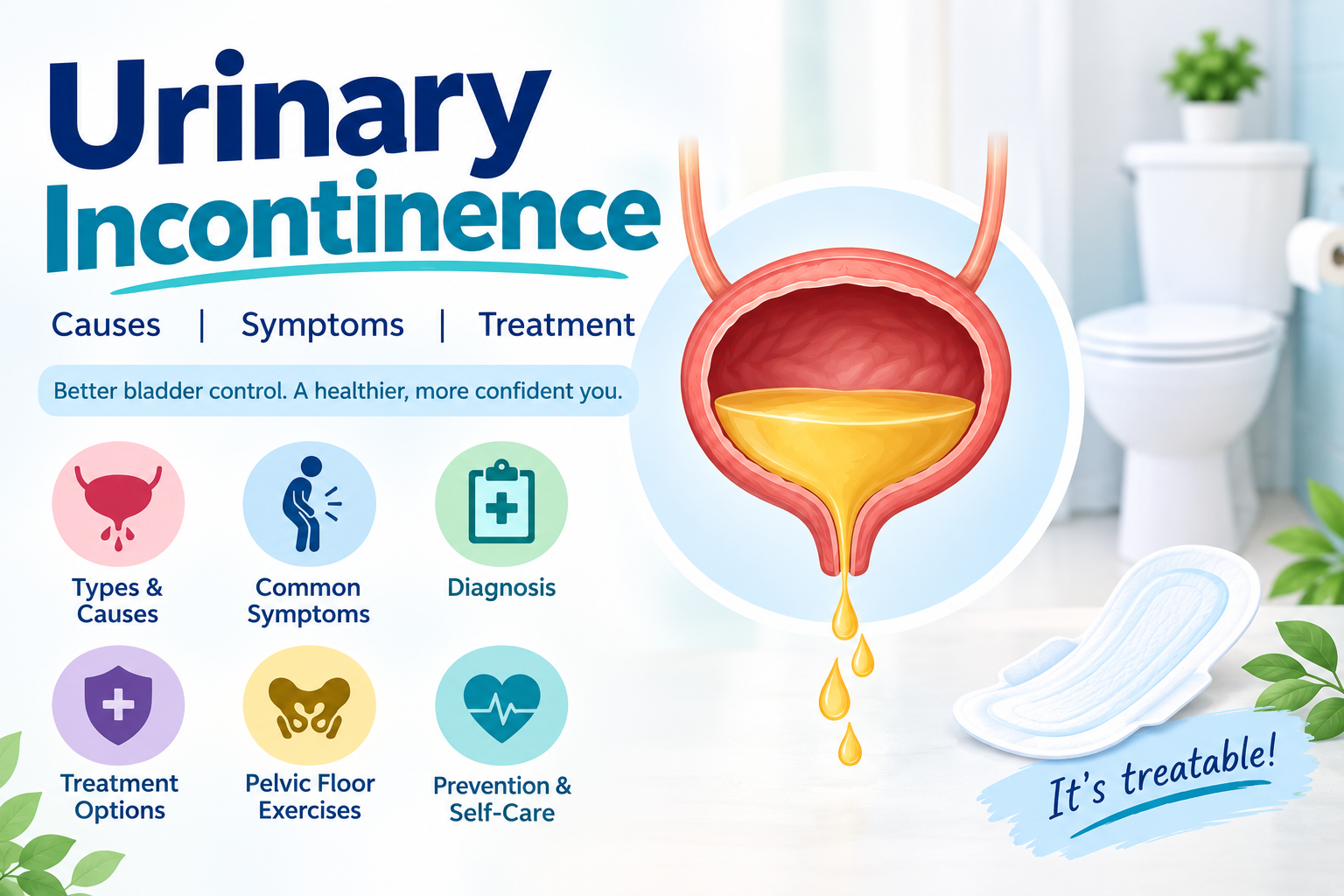
Introduction Urinary incontinence is the involuntary leakage of urine. It is a common condition that can affect women and men of any age, although it becomes more common with increasing age. Urine leakage may occur when coughing, sneezing, exercising, suddenly feeling the urge to urinate, or even without warning. Although urinary incontinence can be embarrassing, it is a medical condition that can often be managed or treated successfully. Early evaluation can help identify the underlying cause and appropriate treatment.
What is Urinary Incontinence?
Urinary incontinence refers to the loss of bladder control that results in accidental urine leakage. The severity can range from occasional leakage of a few drops to frequent or complete loss of bladder control.
Types of Urinary Incontinence
1. Stress Incontinence
Urine leaks when pressure is placed on the bladder, such as during:
Coughing or sneezing
Laughing
Running or jumping
Lifting heavy objects
2. Urge Incontinence
A sudden, strong need to urinate is followed by involuntary urine leakage. It may be associated with an overactive bladder.
3. Overflow Incontinence
The bladder does not empty completely, causing frequent or continuous dribbling of urine.
4. Functional Incontinence
A person may have normal bladder control but be unable to reach the toilet in time because of physical or cognitive difficulties.
5. Mixed Incontinence
This occurs when a person experiences more than one type, commonly stress and urge incontinence together.
Common Causes
Urinary incontinence may be caused by:
Weak pelvic floor muscles
Pregnancy and childbirth
Menopause and hormonal changes
Enlarged prostate
Urinary tract infections
Constipation
Overactive bladder
Neurological disorders
Diabetes
Obesity
Certain medications
Previous pelvic or prostate surgery
Symptoms
The main symptom is unintentional urine leakage. Other symptoms may include:
Frequent urination
Sudden urinary urgency
Waking frequently at night to urinate
Difficulty completely emptying the bladder
Urine leakage while coughing, sneezing, or exercising
Continuous urine dribbling
How is Urinary Incontinence Diagnosed?
A healthcare professional may evaluate urinary incontinence through:
Medical and medication history
Physical examination
Urine tests
Bladder diary
Measurement of urine left in the bladder after urination
Pelvic examination when appropriate
Additional tests such as urodynamic studies or imaging in selected cases
Treatment
Treatment depends on the type and underlying cause of incontinence.
Lifestyle changes
Maintain a healthy weight
Reduce excessive caffeine and alcohol intake
Avoid constipation
Maintain appropriate fluid intake
Follow a regular toilet schedule
Pelvic Floor Exercises
Kegel exercises strengthen the pelvic floor muscles and can be particularly useful for some people with stress incontinence.
Bladder Training
Gradually increasing the time between bathroom visits may help improve bladder control, especially in some cases of urge incontinence.
Medications
Certain medicines may be prescribed for urge incontinence or other specific causes.
Medical Procedures and Surgery
When conservative treatments are insufficient, procedures or surgery may be considered depending on the type and severity of incontinence.
When Should You See a Doctor?
Consult a healthcare professional if urinary leakage is persistent, worsening, affecting daily activities, or interfering with sleep and quality of life. Medical evaluation is especially important if incontinence occurs suddenly or is accompanied by blood in the urine, painful urination, fever, difficulty passing urine, or new neurological symptoms.
Prevention and Self-Care
Not every case of urinary incontinence can be prevented, but some measures may reduce the risk:
Maintain a healthy body weight
Perform regular pelvic floor exercises
Stay physically active
Prevent and treat constipation
Avoid smoking
Manage conditions such as diabetes
Avoid excessive caffeine and alcohol
Conclusion
Urinary incontinence is a common but treatable condition that can affect confidence, sleep, social activities, and overall quality of life. Identifying the underlying cause is important because treatment can range from lifestyle changes and pelvic floor exercises to medications or procedures. Do not hesitate to seek medical advice if you experience persistent urine leakage.
AI GENERATED
Verified and approved by
Ms. Siddiq nisha U. Bsc(Nsg)
Dr. Karthikeyan S. MBBS.,