0%
Reading Progress
Scroll to track your progress
Introduction Dehydration occurs when the body loses more fluids than it takes in. Since water is essential for maintaining blood circulation, body temperature, digestion, and normal organ function, even mild dehydration can affect how the body works. Dehydration can happen due to excessive sweating, vomiting, diarrhea, fever, inadequate fluid intake, or prolonged exposure to heat.
What Is Dehydration?
Dehydration is a condition in which the body does not have enough water and other fluids to function properly. The body continuously loses water through urine, sweat, breathing, and bowel movements. Normally, these losses are replaced by drinking fluids and consuming water-rich foods.
When fluid loss is greater than fluid intake, dehydration develops.
Common Causes of Dehydration
Some common causes include:
Not drinking enough water
Excessive sweating during exercise or hot weather
Fever
Vomiting
Diarrhea
Frequent urination
Prolonged exposure to high temperatures
Excessive alcohol consumption
Certain medications, such as diuretics
Medical conditions that increase fluid loss
Symptoms of Dehydration
Symptoms can vary depending on how severe the dehydration is.
Mild to Moderate Dehydration
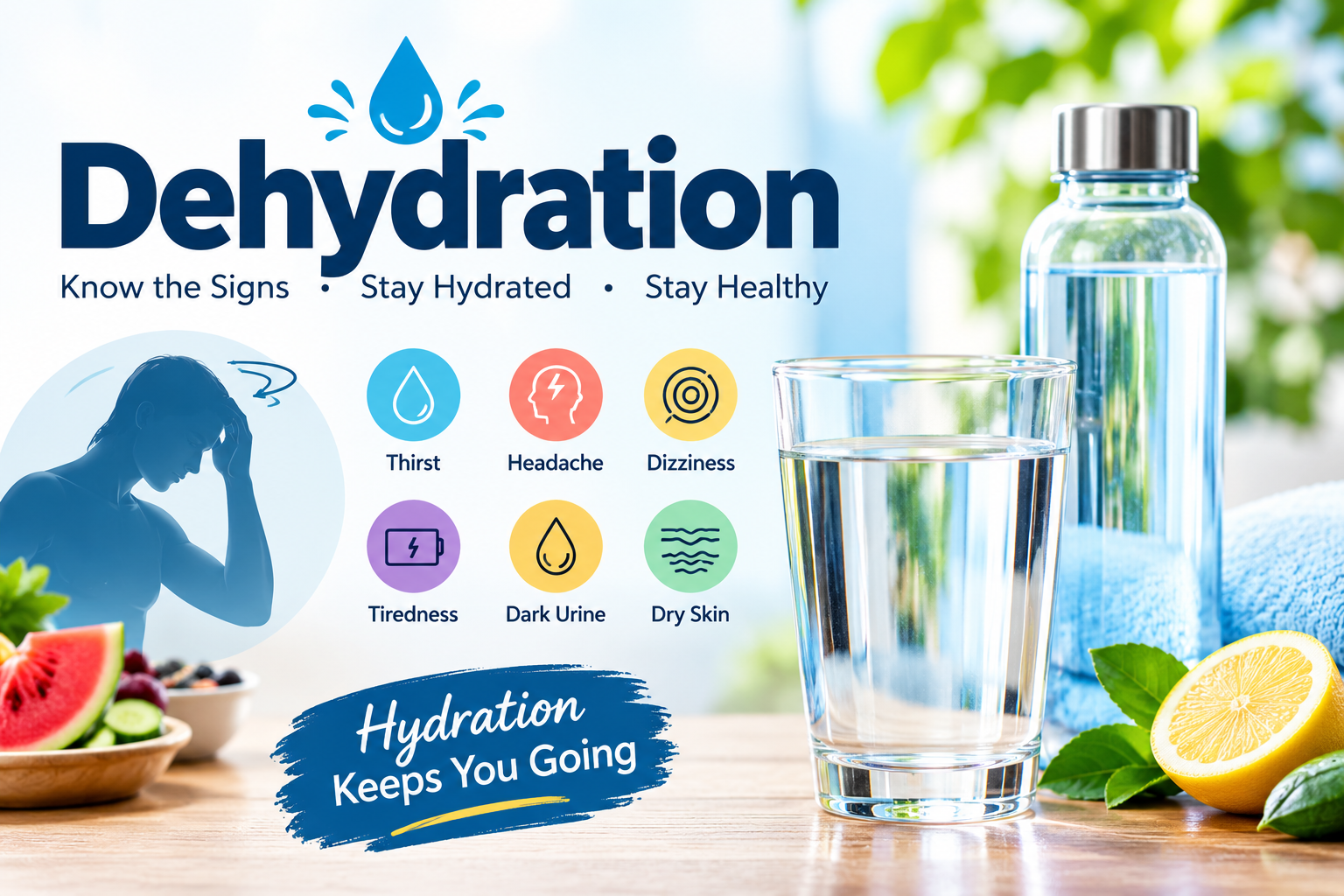
Increased thirst
Dry mouth and lips
Dark yellow urine
Reduced urine output
Headache
Dizziness
Tiredness or weakness
Dry skin
Muscle cramps
Severe Dehydration
Severe dehydration can become a medical emergency. Warning signs include:
Very little or no urine
Severe dizziness or fainting
Confusion or unusual drowsiness
Rapid heartbeat
Rapid breathing
Very low blood pressure
Extreme weakness
Loss of consciousness
Who Is More at Risk?
Anyone can become dehydrated, but certain groups are at higher risk:
Infants and young children
Older adults
People with fever, vomiting, or diarrhea
People who exercise intensely
People working outdoors in hot weather
Individuals with certain chronic medical conditions
People taking medications that increase urine production
How Is Dehydration Diagnosed?
Doctors usually diagnose dehydration based on symptoms, medical history, physical examination, and assessment of fluid loss.
Depending on the situation, tests such as blood tests or urine tests may be recommended to evaluate electrolyte levels and kidney function.
Management of Dehydration
Management depends on the severity and underlying cause.
Mild Dehydration
For mild dehydration:
Drink water regularly.
Increase fluid intake during hot weather or exercise.
Consume water-rich foods such as fruits and vegetables.
If significant fluid loss occurs through vomiting or diarrhea, oral rehydration solution (ORS) may help replace water and electrolytes.
Severe Dehydration
Severe dehydration requires prompt medical attention. In a hospital or healthcare setting, fluids may be given intravenously (IV) when drinking fluids is not possible or when dehydration is severe.
How Can Dehydration Be Prevented?
Drink fluids regularly throughout the day.
Drink more fluids during hot weather.
Increase fluid intake during exercise.
Replace fluids after excessive sweating.
Take extra care when you have fever, vomiting, or diarrhea.
Keep water readily available when working or exercising outdoors.
Pay attention to thirst and urine color.
When Should You See a Doctor?
Seek medical attention if dehydration is severe or symptoms do not improve after drinking fluids. Confusion, fainting, inability to keep fluids down, very little or no urine, or severe weakness require urgent medical evaluation.
Conclusion
Dehydration is common but preventable. Drinking adequate fluids and replacing water and electrolytes lost through sweating, vomiting, or diarrhea can help maintain proper hydration. Recognizing early symptoms and seeking medical care when dehydration becomes severe can help prevent serious complications.
AI GENERATED
Verified and approved by
Ms. Siddiq nisha U. Bsc (Nsg)
Dr. Karthikeyan S. MBBS.,