0%
Reading Progress
Scroll to track your progress
Introduction Dengue fever is a viral infection transmitted mainly through the bite of infected Aedes mosquitoes. It is common in tropical and subtropical regions, including India. Dengue can range from a mild illness with fever and body pain to a severe condition that can cause bleeding, shock, and organ complications. Early recognition of warning signs and timely medical care are important to prevent serious complications.
What Causes Dengue Fever?
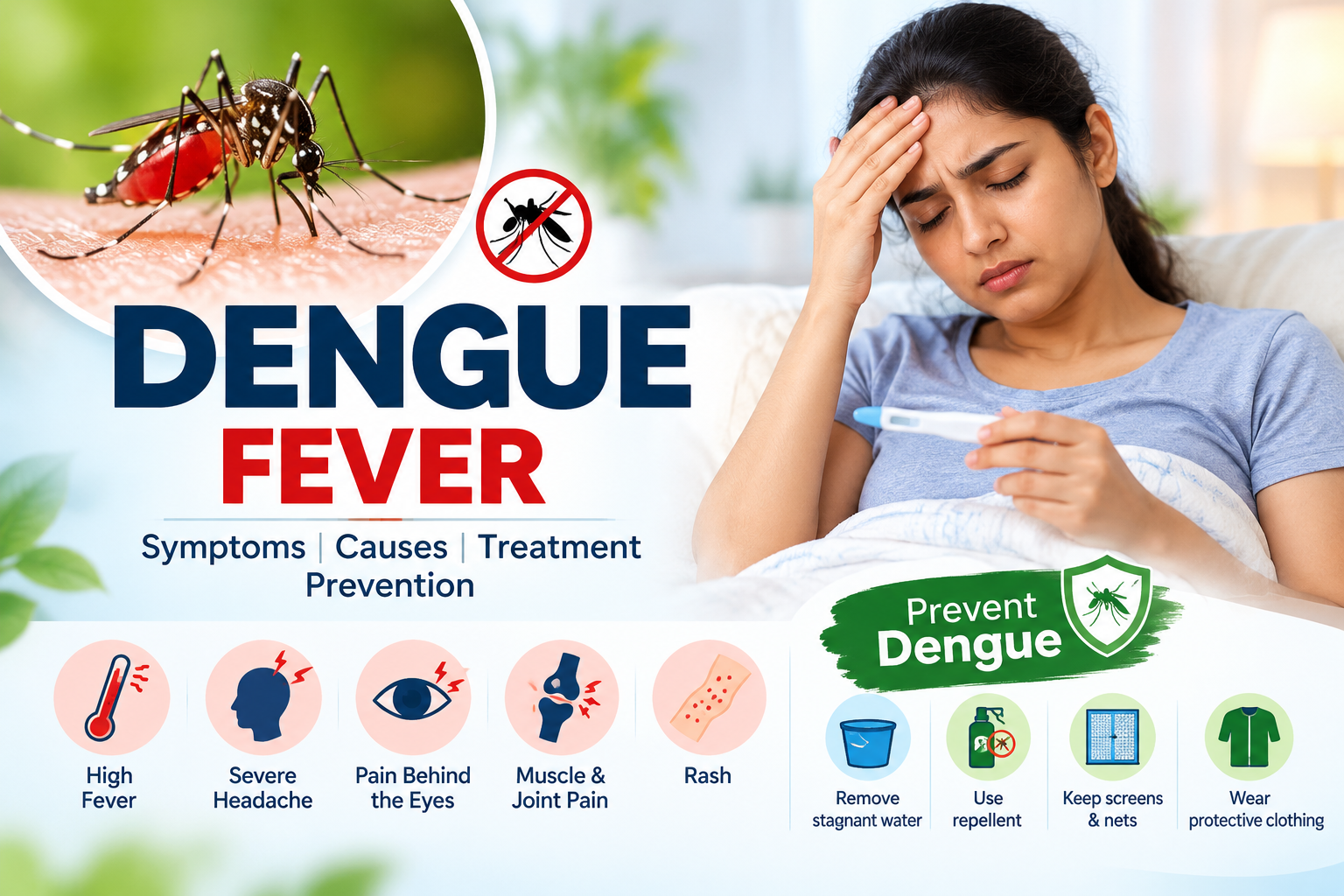
Dengue is caused by the dengue virus (DENV). The virus is mainly spread through the bite of infected female Aedes aegypti and Aedes albopictus mosquitoes.
These mosquitoes commonly breed in stagnant water collected in containers, flower pots, discarded tyres, and other places around homes.
Dengue does not usually spread directly from person to person.
Symptoms of Dengue Fever
Symptoms generally develop 4–10 days after an infected mosquito bite and may include:
Sudden high fever
Severe headache
Pain behind the eyes
Muscle and joint pain
Bone pain
Nausea and vomiting
Skin rash
Extreme tiredness
Mild bleeding, such as bleeding from the nose or gums
Symptoms commonly last several days. However, some people can develop severe dengue, particularly around the time the fever starts to come down.
Warning Signs of Severe Dengue
Seek urgent medical attention if any of these symptoms occur:
Severe abdominal pain
Persistent vomiting
Bleeding from the nose or gums
Vomiting blood or blood in the stool
Rapid breathing
Extreme weakness or restlessness
Pale or cold skin
Drowsiness or confusion
Reduced urine output
Sudden worsening after the fever decreases
Severe dengue can lead to dengue hemorrhagic fever, severe bleeding, shock, or organ damage.
How Is Dengue Diagnosed?
A healthcare professional may diagnose dengue based on symptoms, examination, and blood tests.
Common tests include:
NS1 antigen test – useful particularly during the early stage of infection
Dengue IgM antibody test – can help identify a recent infection
Dengue IgG antibody test – may help determine previous exposure or infection
Complete blood count (CBC) – used to monitor platelet count, hematocrit, and other blood parameters
The appropriate test depends on how many days the person has been ill.
Treatment for Dengue
There is no specific antiviral medicine routinely used to cure dengue. Treatment mainly focuses on controlling symptoms and preventing complications.
Doctors may recommend:
Adequate fluids and oral rehydration
Rest
Paracetamol/acetaminophen for fever and pain, when appropriate
Regular medical monitoring
Hospital care for patients with severe dengue or warning signs
Avoid aspirin and NSAIDs such as ibuprofen unless specifically advised by a doctor, because they can increase the risk of bleeding.
Do not self-medicate based only on the platelet count. The overall clinical condition and blood-test trends are important.
Dengue and Platelet Count
A low platelet count is common during dengue, but platelet count alone does not determine how severe the disease is. Doctors also consider bleeding, blood pressure, hydration, hematocrit, urine output, and other clinical findings.
Patients should follow their doctor's advice regarding repeat blood tests and treatment.
How Can Dengue Be Prevented?
The best way to prevent dengue is to avoid mosquito bites and eliminate mosquito breeding sites.
Personal protection
Use mosquito repellents.
Wear long-sleeved clothing.
Use mosquito screens or nets.
Keep doors and windows screened where possible.
Prevent mosquito breeding
Empty stagnant water from containers regularly.
Keep water storage containers tightly covered.
Clean flower-pot trays and other water-holding containers.
Dispose of discarded tyres, cans, and plastic containers properly.
Keep surroundings clean and dry.
Because Aedes mosquitoes can bite during the daytime, protection should not be limited to nighttime.
When Should You See a Doctor?
Consult a healthcare professional if you develop a high fever with severe body pain, headache, rash, vomiting, or other symptoms suggestive of dengue, especially during a dengue outbreak.
Immediate medical attention is required if warning signs such as severe abdominal pain, persistent vomiting, bleeding, breathing difficulty, confusion, or extreme weakness develop.
Conclusion
Dengue fever is a common mosquito-borne viral infection that can range from mild to life-threatening. Recognizing symptoms early, maintaining adequate hydration, avoiding inappropriate medications, monitoring the illness under medical guidance, and identifying warning signs can help reduce complications. Preventing mosquito breeding and protecting yourself from mosquito bites remain key to controlling dengue.
AI GENERATED
Verified and approved by
Ms. Siddiq nisha U. Bsc (Nsg)
Dr. Karthikeyan S. MBBS.,