0%
Reading Progress
Scroll to track your progress
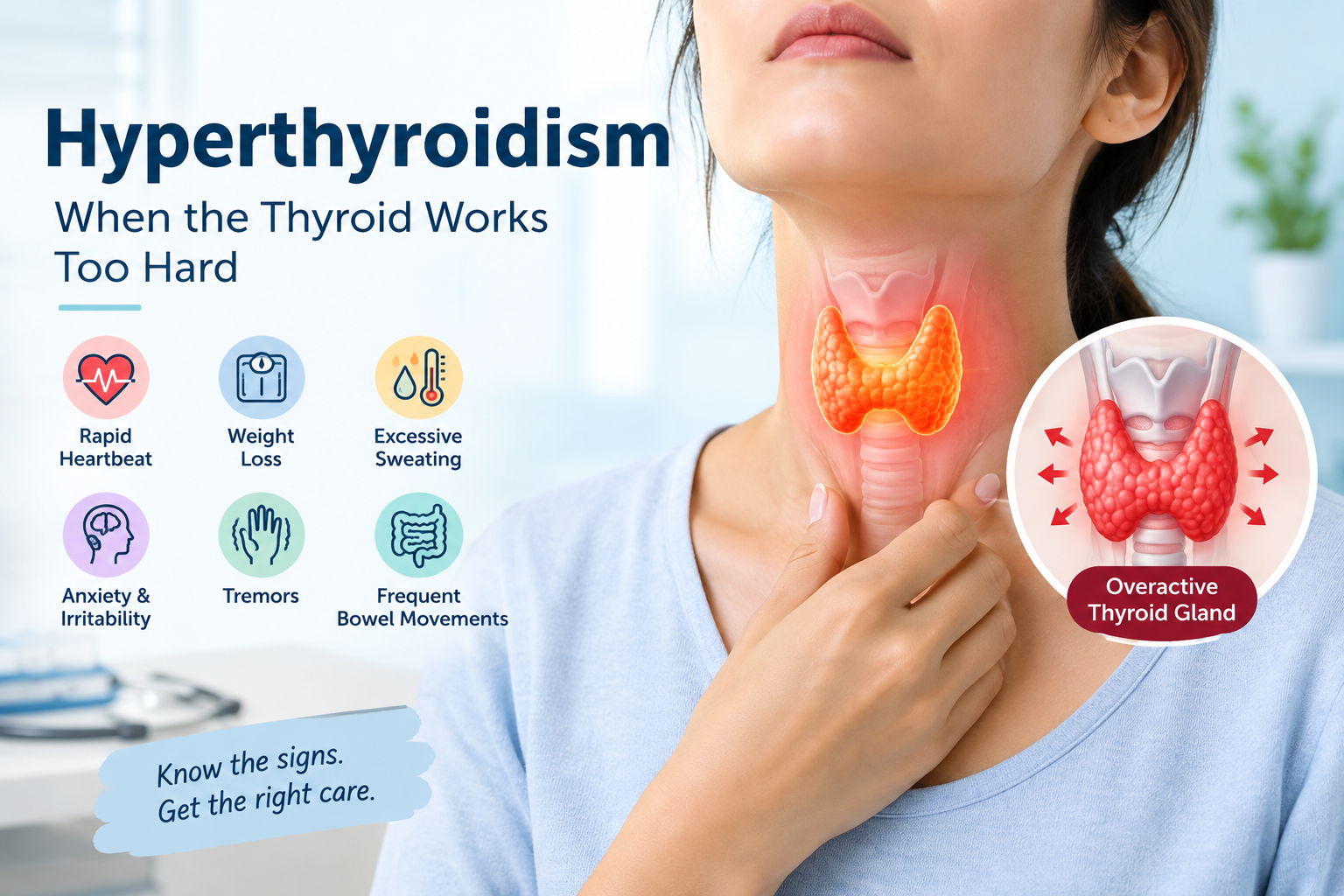
Introduction Hyperthyroidism is a condition in which the thyroid gland produces too much thyroid hormone. These hormones regulate the body’s metabolism, heart rate, temperature, and many other functions. When thyroid hormone levels become excessively high, the body’s processes speed up, causing symptoms such as weight loss, rapid heartbeat, anxiety, sweating, and increased bowel movements. Hyperthyroidism can affect people of any age, but it is more common in women.
What is Hyperthyroidism?
The thyroid gland is a small, butterfly-shaped gland located at the front of the neck. It produces the hormones thyroxine (T4) and triiodothyronine (T3).
In hyperthyroidism, the thyroid gland produces excessive amounts of these hormones. This increases the body's metabolic activity and can affect the heart, nervous system, digestive system, and muscles.
Causes of Hyperthyroidism
Common causes include:
Graves’ disease – an autoimmune condition and the most common cause
Toxic thyroid nodules – thyroid nodules that produce excess hormones
Thyroiditis – inflammation of the thyroid that can temporarily release excess hormones
Excessive intake of iodine
Certain medications containing iodine
Excessive thyroid hormone medication
Rarely, problems involving the pituitary gland
Symptoms of Hyperthyroidism
Symptoms can develop gradually or appear suddenly.
Common symptoms include:
Unexplained weight loss despite normal or increased appetite
Rapid or irregular heartbeat
Excessive sweating
Increased sensitivity to heat
Nervousness, anxiety, or irritability
Trembling of the hands
Difficulty sleeping
Muscle weakness
Fatigue
Frequent bowel movements or diarrhea
Increased thirst
Menstrual irregularities
Difficulty concentrating
Hair thinning or hair loss
Some people with Graves’ disease may also develop bulging eyes (exophthalmos).
Risk Factors
The risk of hyperthyroidism may be higher in people who:
Have a family history of thyroid disease
Have an autoimmune disease
Have Graves’ disease
Have thyroid nodules
Consume excessive iodine
Take thyroid hormone medication
Are older adults
Diagnosis
Doctors usually diagnose hyperthyroidism using a combination of symptoms, physical examination, and blood tests.
Common investigations include:
TSH test – usually low in primary hyperthyroidism
Free T4 and T3 – may be elevated
Thyroid antibody tests – may help identify Graves’ disease
Thyroid ultrasound – may be used to evaluate thyroid nodules
Radioactive iodine uptake scan – may help determine the cause in selected patients
Treatment
Treatment depends on the cause, severity, age, overall health, and other individual factors.
1. Antithyroid Medicines
Medicines such as methimazole can reduce the production of thyroid hormones. Another medicine, propylthiouracil (PTU), may be used in specific situations.
2. Radioactive Iodine Therapy
Radioactive iodine can destroy overactive thyroid tissue and reduce hormone production. It is commonly used for Graves’ disease and toxic thyroid nodules.
3. Surgery
A thyroidectomy, or removal of part or all of the thyroid gland, may be recommended in certain patients, particularly when there is a large goiter, suspicious nodules, or when other treatments are unsuitable.
4. Beta-Blockers
Beta-blockers may be prescribed to temporarily control symptoms such as rapid heartbeat, tremors, and anxiety while the underlying hyperthyroidism is being treated.
Complications
Untreated hyperthyroidism can lead to complications such as:
Abnormal heart rhythms, including atrial fibrillation
Heart failure
Osteoporosis and weakened bones
Muscle weakness
Eye problems associated with Graves’ disease
Menstrual and fertility problems
Thyroid storm, a rare but potentially life-threatening complication
Thyroid storm can cause very high heart rate, high fever, severe agitation or confusion, vomiting, and other serious symptoms. It requires emergency medical treatment.
Hyperthyroidism and Diet
There is no single diet that cures hyperthyroidism. A balanced diet containing adequate calories, protein, calcium, and vitamin D can help support overall health.
People with hyperthyroidism should avoid taking iodine supplements or iodine-containing products without medical advice, as excessive iodine can worsen some forms of hyperthyroidism.
When to See a Doctor
Consult a healthcare professional if you experience unexplained weight loss, persistent rapid heartbeat, tremors, excessive sweating, anxiety, or other symptoms suggestive of hyperthyroidism.
Seek urgent medical attention for severe rapid heartbeat, high fever, confusion, fainting, severe weakness, or difficulty breathing.
Conclusion
Hyperthyroidism is a common thyroid disorder that can affect metabolism, the heart, muscles, and nervous system. Early diagnosis and appropriate treatment can control symptoms and prevent complications. If you have symptoms suggestive of hyperthyroidism, thyroid function testing and medical evaluation are important.
AI GENERATED
Verified and approved by
Ms. Siddiq nisha U. Bsc (Nsg)
Dr. Karthikeyan S. MBBS.,