0%
Reading Progress
Scroll to track your progress
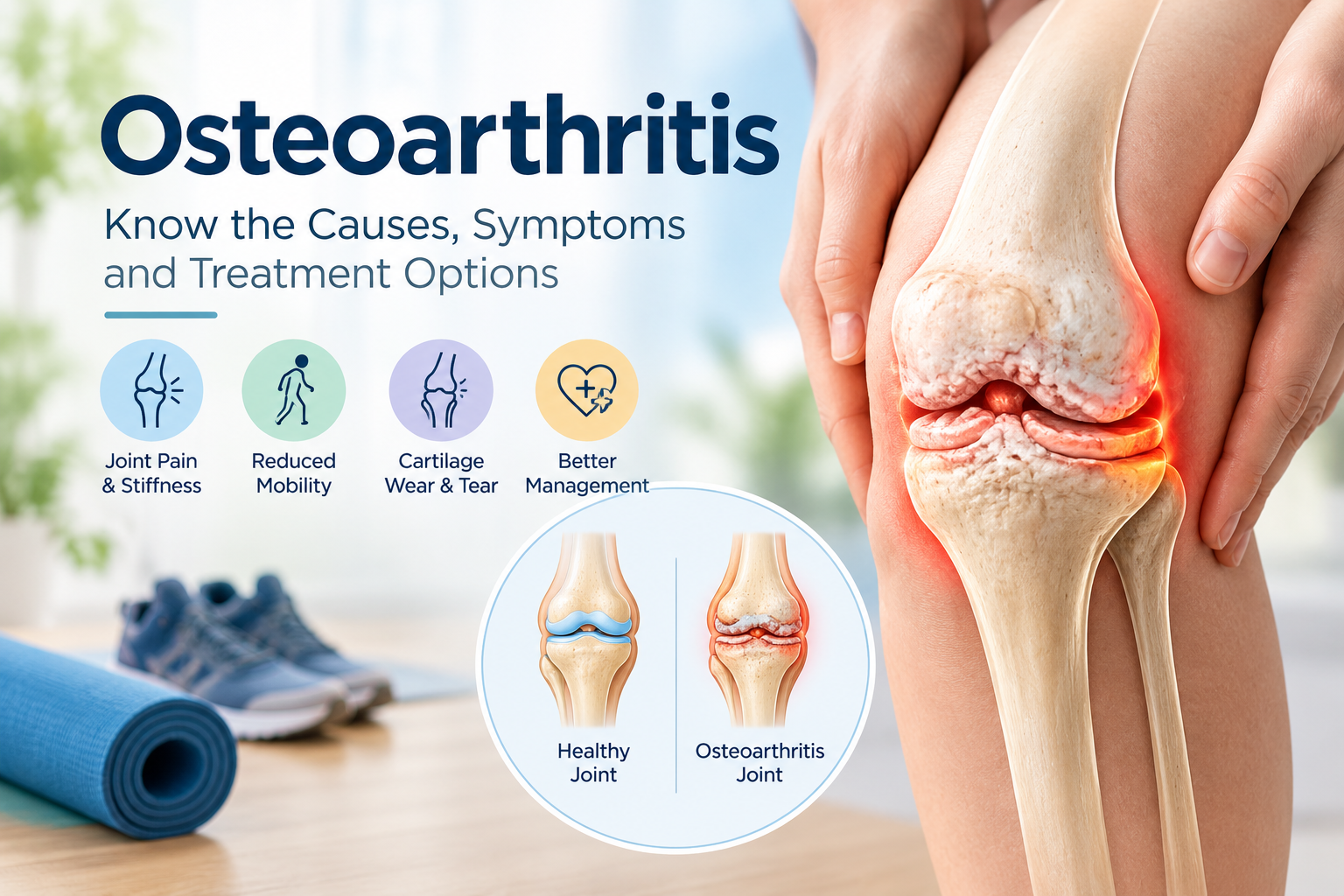
Introduction Osteoarthritis is a common joint condition that occurs when the protective cartilage at the ends of bones gradually wears down. This can cause joint pain, stiffness, swelling, and difficulty moving. It commonly affects the knees, hips, hands, and spine. Although osteoarthritis is more common in older adults, it can affect people of different ages.
What Is Osteoarthritis?
Osteoarthritis (OA) is a degenerative joint disease in which the cartilage that cushions the bones becomes damaged over time. As the condition progresses, the bones may rub against each other, causing pain and reduced joint movement.
Early diagnosis and proper treatment can help manage symptoms and improve quality of life.
Causes of Osteoarthritis
The common causes and risk factors include:
Age: The risk increases as people get older.
Obesity: Excess body weight puts additional pressure on weight-bearing joints.
Joint injuries: Previous injuries may increase the risk of osteoarthritis.
Family history: Genetics can contribute to the development of the condition.
Repeated joint stress: Certain activities may place repeated pressure on the joints.
Joint abnormalities: Some people have joint structures that increase their risk.
Symptoms of Osteoarthritis
Common symptoms include:
Joint pain during movement or after activity.
Stiffness, especially in the morning or after resting.
Swelling around the affected joint.
Reduced flexibility and range of motion.
A grinding or clicking sensation during movement.
Difficulty walking, climbing stairs, or performing daily activities.
Symptoms may develop gradually and become more noticeable over time.
Types of Osteoarthritis
Osteoarthritis can affect different joints in the body.
Knee osteoarthritis: Causes knee pain, stiffness, and difficulty walking.
Hip osteoarthritis: Leads to pain around the hip, groin, or thigh.
Hand osteoarthritis: Affects the fingers and thumb, making gripping difficult.
Spinal osteoarthritis: Can cause neck or back pain and stiffness.
Diagnosis of Osteoarthritis
Doctors diagnose osteoarthritis by reviewing symptoms, examining the affected joints, and assessing movement. X-rays may be used to identify joint-space narrowing and bone changes. Other tests may be recommended when necessary to rule out different conditions.
Treatment for Osteoarthritis
There is no treatment that completely reverses osteoarthritis, but several options can help reduce pain and improve movement.
Exercise and physiotherapy: Strengthening exercises and gentle physical activity help support the joints.
Weight management: Losing excess weight can reduce pressure on the knees and hips.
Medications: Doctors may recommend suitable pain-relief medicines or topical treatments.
Hot and cold therapy: Heat may ease stiffness, while cold packs can help relieve pain and swelling.
Assistive devices: Walking aids or supportive devices may reduce stress on affected joints.
Surgery: Joint replacement may be considered when severe symptoms do not improve with other treatments.
Treatment should be chosen according to the person's symptoms, general health, and severity of the condition.
Prevention and Lifestyle Tips
Although osteoarthritis cannot always be prevented, these habits may help protect joint health:
Maintain a healthy body weight.
Stay physically active with low-impact exercises such as walking, swimming, or cycling.
Strengthen the muscles around the joints.
Avoid excessive repetitive stress on painful joints.
Wear comfortable, supportive footwear.
Seek medical advice if joint pain persists or worsens.
When to See a Doctor
Consult a doctor if joint pain or stiffness affects your daily activities, persists for several weeks, or gradually worsens. Seek urgent medical attention if a joint suddenly becomes very painful, hot, red, or significantly swollen, especially with fever.
Conclusion
Osteoarthritis is a common joint condition that can affect mobility and daily life. Early diagnosis, regular exercise, weight management, and appropriate treatment can help control symptoms and maintain joint function. With proper care and lifestyle changes, many people with osteoarthritis can continue to lead active lives.
AI GENERATED
Verified and approved by
Ms.Siddiq nisha U. Bsc (Nsg)
Dr.Karthikeyan S. MBBS