0%
Reading Progress
Scroll to track your progress
Sinusitis
Introduction
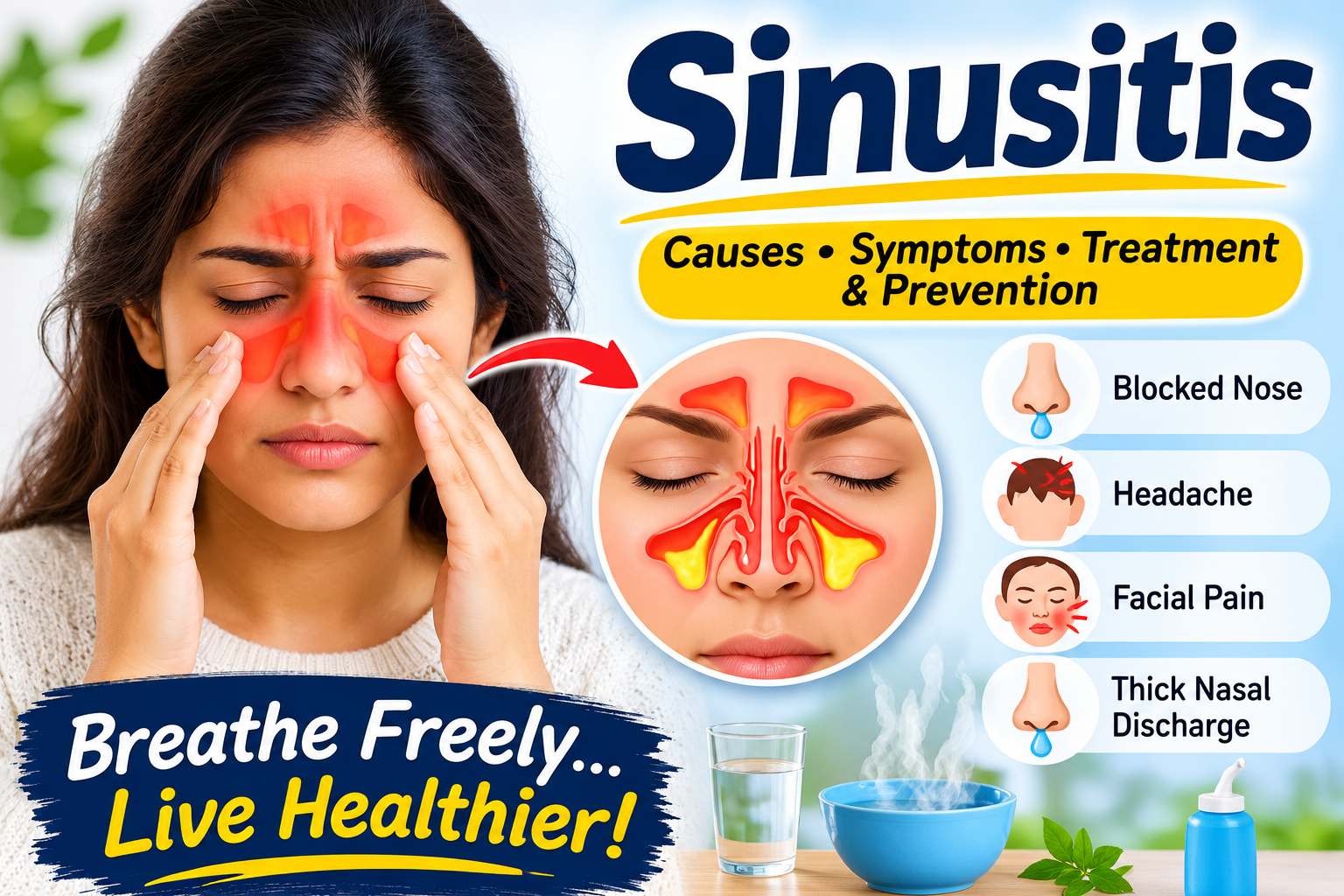
Sinusitis is a condition in which the tissues lining the sinuses become inflamed or swollen. The sinuses are air-filled spaces located around the nose, cheeks, forehead, and eyes. This inflammation can cause nasal congestion, facial pain, headache, and difficulty breathing through the nose.
Sinusitis commonly develops after a cold or other respiratory infection. It can also occur due to allergies or other conditions that block the normal drainage of mucus from the sinuses.
What Are the Causes of Sinusitis?
Sinusitis can develop due to several factors, including:
Viral infections: Common colds are a frequent cause of acute sinusitis.
Bacterial infections: Some cases develop when bacteria grow in blocked sinuses.
Allergies: Allergic reactions can cause swelling inside the nose and block sinus drainage.
Nasal polyps: These non-cancerous growths may obstruct the nasal passages.
Deviated nasal septum: A crooked wall between the nostrils can interfere with drainage.
Environmental irritants: Smoke, dust, and air pollution may worsen nasal inflammation.
Common Symptoms of Sinusitis
Symptoms may vary depending on the severity and duration of the condition. Common symptoms include:
Blocked or stuffy nose
Thick nasal discharge
Pain or pressure around the cheeks, forehead, or eyes
Headache
Reduced sense of smell
Mucus dripping down the throat (postnasal drip)
Cough, especially at night
Bad breath
Tiredness
Fever in some cases
Types of Sinusitis
1. Acute sinusitis
Acute sinusitis usually lasts less than four weeks and often develops following a common cold.
2. Subacute sinusitis
Subacute sinusitis lasts approximately four to twelve weeks.
3. Chronic sinusitis
Chronic sinusitis involves inflammation lasting at least twelve weeks, even with treatment. It may be associated with allergies, nasal polyps, or other underlying conditions.
4. Recurrent acute sinusitis
This occurs when a person experiences multiple separate episodes of acute sinusitis within a year, with improvement between episodes.
How Is Sinusitis Diagnosed?
A healthcare professional may diagnose sinusitis based on symptoms, medical history, and a physical examination.
Depending on the situation, the doctor may recommend:
Examination of the nose and throat
Nasal endoscopy to examine the nasal passages
CT scan for persistent, complicated, or chronic cases
Allergy testing when allergies are suspected
Imaging tests are not usually necessary for uncomplicated acute sinusitis.
Treatment for Sinusitis
Treatment depends on the cause, severity, and duration of symptoms.
Saline nasal irrigation: Helps clear mucus and irritants. Use sterile, distilled, or previously boiled and cooled water.
Nasal corticosteroid sprays: May help reduce inflammation, particularly in chronic sinusitis or allergy-related symptoms.
Pain relievers: May help relieve facial pain, headache, and fever when appropriate.
Antihistamines: May be useful when allergies contribute to symptoms.
Antibiotics: Are needed only in selected cases of bacterial sinusitis. Most acute cases are viral and do not require antibiotics.
Steam from a hot shower may provide temporary comfort, but avoid inhaling steam over boiling water because of the risk of burns. Persistent or severe symptoms should be assessed by a healthcare professional.
Home Care and Prevention
The following measures may help relieve symptoms and reduce irritation:
Drink enough water to stay hydrated.
Get adequate rest.
Use saline nasal sprays or rinses as directed.
Avoid cigarette smoke, dust, and other known irritants.
Manage allergies appropriately.
Wash your hands regularly to reduce the spread of respiratory infections.
Avoid unnecessary use of antibiotics and nasal decongestant sprays.
When Should You See a Doctor?
Consult a healthcare professional if symptoms last more than ten days without improvement, worsen after initially improving, or are accompanied by persistent fever or significant facial pain.
Seek urgent medical attention if you experience swelling or redness around the eyes, vision changes, severe headache, confusion, or neck stiffness, as these may indicate a serious complication.
Conclusion
Sinusitis is a common condition that causes inflammation of the sinus lining and may lead to nasal blockage, facial pressure, headache, and reduced sense of smell. Many acute cases improve with supportive care. Identifying underlying allergies and seeking appropriate medical treatment for persistent symptoms can help prevent ongoing discomfort and complications.