0%
Reading Progress
Scroll to track your progress
Cataract
What Is a Cataract?
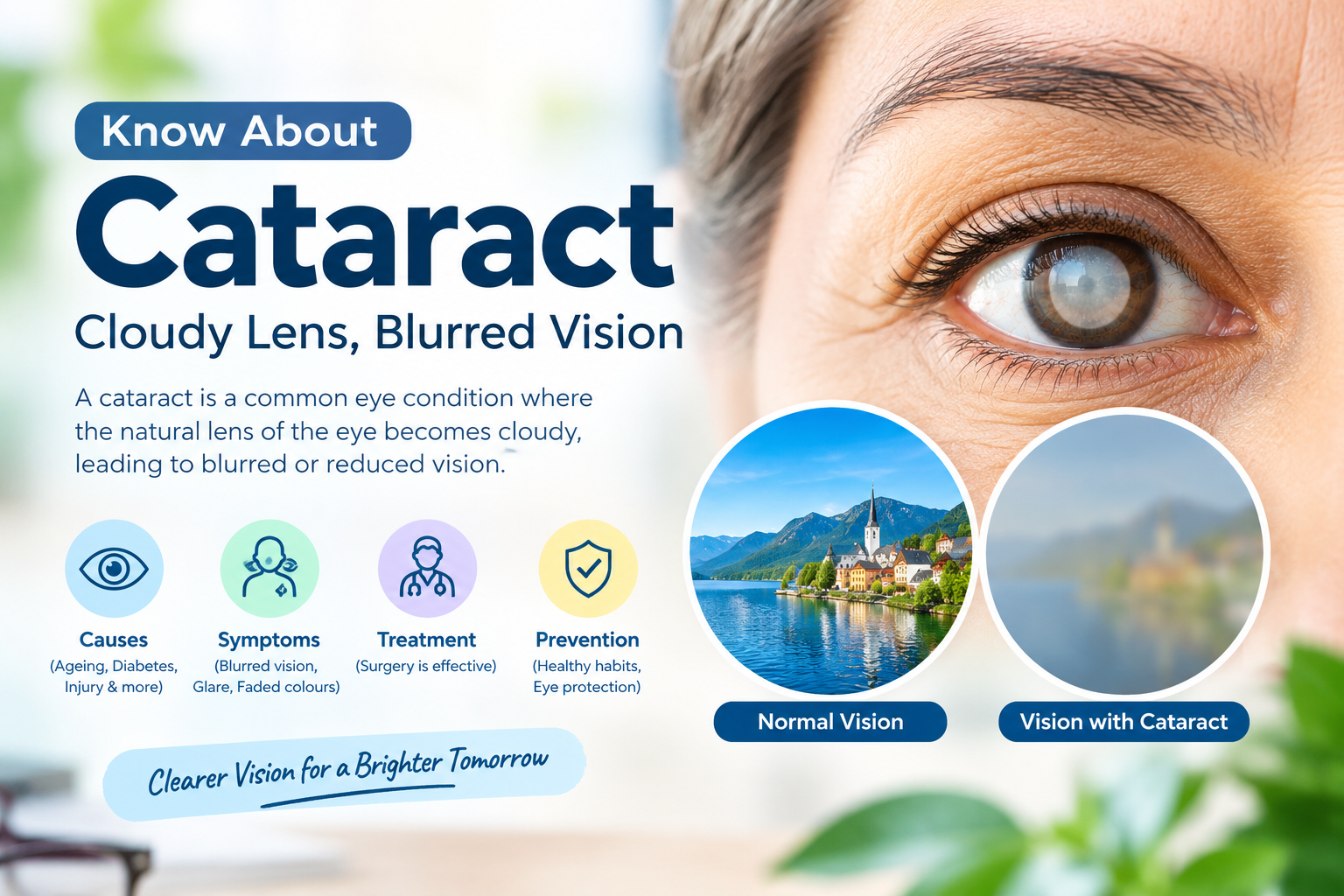
A cataract is an eye condition in which the natural lens of the eye becomes cloudy, causing blurred or unclear vision. The eye’s natural lens helps focus light onto the retina so that we can see clearly. When the lens becomes cloudy, it becomes difficult to see objects clearly.
Cataracts commonly develop with age, but they can also occur due to diabetes, eye injuries, certain medications, or other medical conditions. Early diagnosis and appropriate treatment can help prevent vision problems from affecting daily activities.
Causes of Cataract
The common causes and risk factors of cataracts include:
Ageing: The most common cause, as the eye’s lens gradually changes over time.
Diabetes: High blood sugar levels can increase the risk of cataract development.
Eye injuries: Trauma or injury to the eye can lead to cataracts.
Prolonged steroid use: Long-term use of certain steroid medications may increase the risk.
Family history: Genetics can influence the likelihood of developing cataracts.
Excessive UV exposure: Long-term exposure to ultraviolet sunlight may contribute to lens damage.
Smoking: Smoking is associated with an increased risk of cataracts.
Congenital conditions: Some babies are born with cataracts or develop them during childhood.
Symptoms of Cataract
Cataracts usually develop slowly, and symptoms may become more noticeable over time.
Common symptoms include:
Blurred or cloudy vision
Difficulty seeing clearly at night
Increased sensitivity to bright light and glare
Halos around lights
Faded or yellowish colours
Frequent changes in spectacle prescription
Difficulty reading or recognising faces
Double vision in one eye in some cases
If these symptoms occur, an eye examination is recommended to identify the cause.
Types of Cataract
The main types of cataracts include:
Age-related cataract: Develops naturally as a person gets older.
Congenital cataract: Present at birth or develops during childhood.
Traumatic cataract: Occurs following an eye injury.
Secondary cataract: Develops due to conditions such as diabetes or the use of certain medications.
Radiation-related cataract: May develop after exposure to certain types of radiation.
How Is Cataract Diagnosed?
An eye specialist can diagnose cataracts through a comprehensive eye examination. The evaluation may include:
Visual acuity test to assess vision clarity
Slit-lamp examination to examine the structures of the eye
Dilated eye examination to assess the lens and retina
Eye pressure measurement when appropriate
These tests help determine the severity of the cataract and whether treatment is necessary.
Treatment for Cataract
Treatment depends on the severity of the condition and how much it affects daily life.
1. Early-stage management
In the early stages, stronger lighting, anti-glare measures, and updated spectacles may help improve vision temporarily. However, these measures do not remove the cataract.
2. Cataract surgery
Surgery is the only effective way to remove a cataract. During the procedure, the cloudy natural lens is removed and replaced with an artificial intraocular lens (IOL).
Cataract surgery is generally safe and commonly performed. Most patients experience improved vision, although recovery and results depend on overall eye health and any other existing eye conditions.
There are no proven eye drops or medicines that can dissolve or reverse an established cataract.
Can cataracts be prevented?
Cataracts cannot always be prevented, but certain habits may help reduce the risk or delay their development.
Wear sunglasses that provide 100% UVA and UVB protection.
Use protective eyewear when working in environments where eye injuries may occur.
Manage diabetes and other health conditions appropriately.
Avoid smoking.
Eat a balanced diet rich in fruits and vegetables.
Attend regular eye examinations, particularly as you get older.
Use steroid medications only as prescribed by a healthcare professional.
When Should You Consult an Eye Specialist?
Consult an ophthalmologist if you notice persistent blurred vision, increasing glare, difficulty driving at night, or other changes in your eyesight.
Seek urgent medical attention if you experience sudden vision loss, severe eye pain, a very red eye, or sudden visual disturbances. These symptoms are not typical of an uncomplicated cataract and may indicate another serious eye condition.
Conclusion
Cataracts are a common cause of vision impairment, particularly among older adults. Although they often develop gradually, they can interfere with reading, driving, and other daily activities. Regular eye examinations, appropriate eye protection, and timely treatment can help maintain good vision and quality of life.
AI GENERATED
Verified and approved by
Ms.Siddiq nisha U. Bsc (Nsg)
Dr.Karthikeyan S. MBBS.,