0%
Reading Progress
Scroll to track your progress
Frequently Asked Questions (FAQs)
1. What is an anomaly scan?
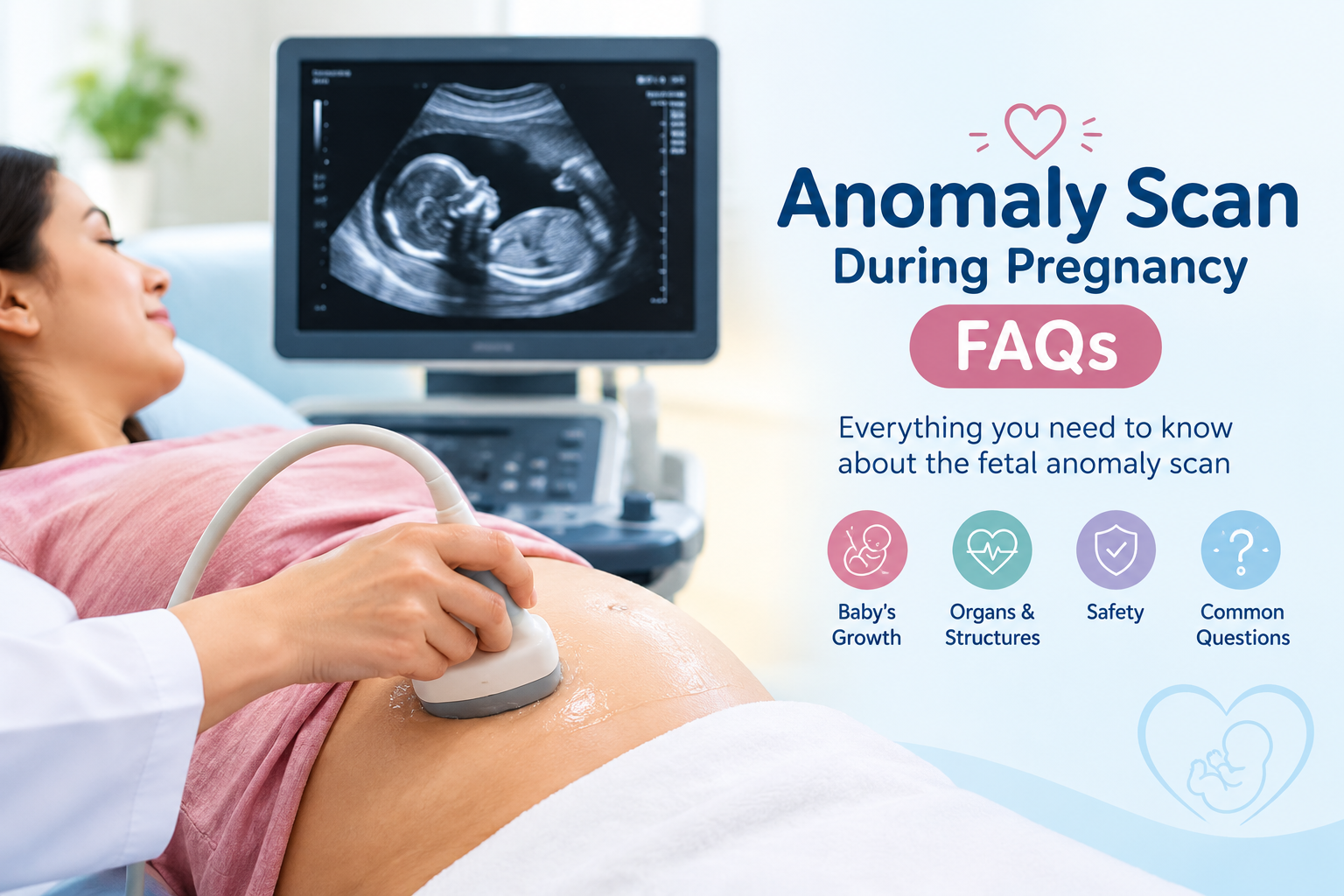
An anomaly scan, also known as a fetal anomaly scan or Level 2 ultrasound, is a detailed ultrasound examination performed during pregnancy to check the baby's growth, development, and physical structures. It helps identify certain structural abnormalities in the developing baby.
2. When is an anomaly scan performed?
An anomaly scan is usually performed between 18 and 22 weeks of pregnancy. This is the ideal period to examine the baby's organs and body structures in detail.
3. Why is an anomaly scan important?
An anomaly scan helps to:
Examine the baby's brain and spine.
Check the heart and its major structures.
Examine the kidneys, stomach, and bladder.
Assess the baby's arms, legs, hands, and feet.
Check the face, lips, and other body structures.
Evaluate the placenta and amniotic fluid.
4. Is an anomaly scan safe for the baby?
Yes. Anomaly scans use ultrasound sound waves and do not involve radiation. They are considered safe when performed by trained healthcare professionals for appropriate medical purposes.
5. Is an anomaly scan painful?
No. An anomaly scan is painless and non-invasive. A sonographer applies ultrasound gel to the abdomen and moves a probe over the skin to obtain images of the baby.
6. How long does an anomaly scan take?
An anomaly scan usually takes around 30–60 minutes, depending on the baby's position and how clearly the organs can be examined.
7. Can an anomaly scan detect all birth defects?
No. An anomaly scan can detect many major structural abnormalities, but it cannot identify every birth defect or genetic condition. Some abnormalities may not be visible during the scan or may develop later in pregnancy.
8. Can an anomaly scan detect Down syndrome?
An anomaly scan is not a diagnostic test for Down syndrome. Although certain ultrasound findings may indicate an increased chance of chromosomal conditions, additional screening or diagnostic tests may be recommended.
9. Can an anomaly scan detect heart defects?
Yes. The scan examines the baby's heart, including its chambers and major blood vessels. However, not all heart defects can be detected through a routine anomaly scan.
10. Can an anomaly scan identify the baby's gender?
Ultrasound may sometimes show the baby's external genital appearance. However, in India, prenatal sex determination and disclosure of fetal sex are prohibited under the PCPNDT Act.
11. Do I need to fast before an anomaly scan?
No. Fasting is generally not required before an anomaly scan. You can eat and drink normally unless your healthcare provider gives different instructions.
12. Should I drink water before an anomaly scan?
A full bladder is generally not necessary at 18–22 weeks, but preparation instructions may vary depending on the imaging centre.
13. What happens if the baby is not in the correct position?
If the baby is in an unsuitable position, the sonographer may ask you to walk for a few minutes or change your position. Sometimes, another appointment may be needed to complete the examination.
14. What happens if an abnormality is detected?
If the scan shows a suspected abnormality, your doctor may recommend a detailed ultrasound, fetal echocardiography, genetic counselling, or additional diagnostic tests depending on the findings.
15. What does a normal anomaly scan report mean?
A normal report means that no major structural abnormalities were identified during the examination. However, it does not guarantee that the baby has no health or developmental conditions.
16. Is an anomaly scan mandatory during pregnancy?
It is an important recommended part of routine antenatal care. It helps assess the baby's anatomical development and identify certain abnormalities early.
17. Can I have an anomaly scan after 22 weeks?
Yes. If the scan was missed between 18 and 22 weeks, consult your obstetrician about having it as soon as possible. Some structures may still be assessed, although timing can affect the examination.
18. Does an anomaly scan require a doctor's prescription?
Requirements may vary between hospitals and diagnostic centres. It is generally performed as part of routine pregnancy care following advice from an obstetrician.
19. Is a follow-up scan needed after an anomaly scan?
A follow-up scan may be recommended if some organs could not be clearly visualised, the baby's position limited the examination, or further evaluation is required.
Conclusion
An anomaly scan is an important ultrasound examination during pregnancy that provides detailed information about the baby's physical development. Usually performed between 18 and 22 weeks, it helps identify certain structural abnormalities and supports appropriate pregnancy care. Regular antenatal check-ups and timely scans help ensure better monitoring of maternal and fetal health.
AI GENERATED
Verified and approved by Ms. Siddiq nisha U. Bsc (Nsg)
Dr. Karthikeyan S. MBBS