0%
Reading Progress
Scroll to track your progress
Frequently Asked Questions (FAQs)
1. What is acidity?
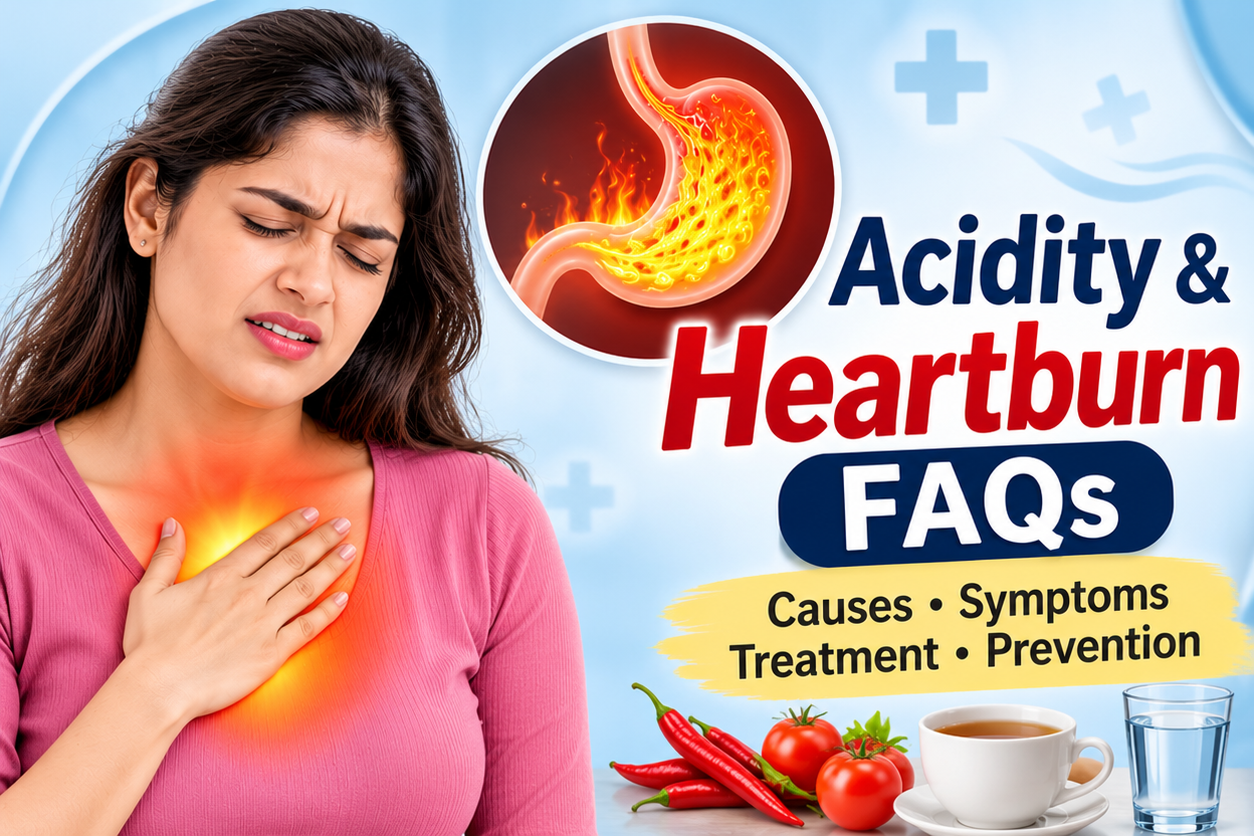
Acidity is a commonly used term to describe symptoms caused by excess stomach acid or acid reflux. It may cause a burning sensation in the upper abdomen, chest discomfort, sour burps, and an unpleasant taste in the mouth.
2. What is heartburn?
Heartburn is a burning sensation in the chest that usually occurs when stomach acid flows backward into the oesophagus. It may become worse after eating, bending forward, or lying down.
3. What is the difference between acidity and heartburn?
Acidity is a general term used for acid-related digestive symptoms, whereas heartburn specifically refers to a burning sensation in the chest caused by acid reflux.
4. What are the common symptoms of acidity and heartburn?
Common symptoms include:
Burning sensation in the chest.
Burning discomfort in the upper abdomen.
Sour or bitter taste in the mouth.
Frequent burping.
Bloating.
Nausea.
Regurgitation of food or sour liquid.
Throat irritation.
5. What causes acidity and heartburn?
Some common causes include:
Eating large meals.
Consuming spicy or oily foods.
Drinking too much coffee or tea.
Eating close to bedtime.
Overweight or obesity.
Smoking.
Alcohol consumption.
Pregnancy.
Certain medications.
6. Which foods can trigger acidity?
Certain foods may trigger acid reflux in some individuals, including:
Spicy foods.
Fried and fatty foods.
Citrus fruits.
Tomatoes and tomato-based products.
Chocolate.
Coffee and caffeinated beverages.
Carbonated drinks.
Mint.
Food triggers can vary from person to person.
7. Can stress cause acidity?
Stress may worsen digestive symptoms and increase sensitivity to acid reflux. It can also affect eating habits and digestion, potentially contributing to heartburn.
8. Can acidity cause chest pain?
Yes. Acid reflux can cause burning chest discomfort that may sometimes feel similar to heart-related chest pain.
However, new, severe, or unexplained chest pain should never automatically be assumed to be acidity. Seek emergency medical care, particularly if it is associated with breathlessness, sweating, dizziness, or pain spreading to the arm, jaw, or back.
9. What is GERD?
GERD (Gastroesophageal Reflux Disease) is a chronic digestive condition in which stomach contents repeatedly flow back into the oesophagus, causing troublesome symptoms or complications.
Frequent heartburn and acid regurgitation are common symptoms of GERD.
10. What is the difference between acidity and GERD?
Acidity may occur occasionally due to eating habits or other triggers. GERD is a long-term condition involving repeated acid reflux that causes troublesome symptoms or complications.
11. Can acidity cause nausea and vomiting?
Yes. Acid reflux and stomach irritation may sometimes cause nausea. Some people may also experience regurgitation or vomiting. Frequent or persistent vomiting requires medical evaluation.
12. Can acidity cause a sore throat or cough?
Yes. Acid reflux may irritate the throat and voice box. Some individuals experience:
Chronic cough.
Hoarseness of voice.
Throat irritation.
Frequent throat clearing.
A sensation of a lump in the throat.
However, these symptoms can also have other causes.
13. How is acidity and heartburn diagnosed?
Doctors usually diagnose acidity and heartburn based on symptoms and medical history.
Depending on the symptoms, additional investigations may include:
Upper gastrointestinal endoscopy.
24-hour oesophageal pH monitoring.
Oesophageal impedance testing.
Oesophageal manometry in selected cases.
14. What is the treatment for acidity and heartburn?
Treatment depends on the severity and frequency of symptoms.
Common treatment options include:
Antacids to provide temporary relief.
H2 receptor blockers to reduce stomach acid.
Proton pump inhibitors (PPIs) to reduce acid production.
Lifestyle and dietary modifications.
Medications should be used according to medical advice, particularly when symptoms occur frequently.
15. How can acidity be prevented naturally?
Some lifestyle changes can help reduce acidity:
Eat smaller, more frequent meals if large meals trigger symptoms.
Avoid overeating.
Eat slowly and chew food properly.
Avoid lying down immediately after meals.
Maintain a healthy body weight.
Identify and avoid personal food triggers.
Avoid smoking.
Limit alcohol consumption.
16. Is drinking water helpful for acidity?
Drinking water may help relieve dry mouth and wash away acid that has reached the throat. However, water does not directly treat the underlying cause of acid reflux.
17. Can acidity occur at night?
Yes. Night-time acid reflux may occur when a person lies down soon after eating. It can cause chest burning, sour taste, coughing, and disturbed sleep.
Avoid eating within 2–3 hours before bedtime and consider elevating the head of the bed if night-time reflux occurs.
18. Why does acidity increase during pregnancy?
Acidity is common during pregnancy because hormonal changes relax the lower oesophageal sphincter, allowing stomach acid to flow backward. The growing uterus may also increase pressure on the stomach.
Eating smaller meals and avoiding trigger foods may help. Pregnant women should consult their doctor before taking acidity medications.
19. When should you consult a doctor for acidity?
Medical consultation is recommended if:
Heartburn occurs frequently.
Symptoms persist despite lifestyle changes.
You experience difficulty swallowing.
Food feels stuck while swallowing.
You have persistent nausea or vomiting.
You experience unexplained weight loss.
You notice blood in vomit or black stools.
20. Can acidity be completely cured?
Occasional acidity can often be controlled with lifestyle changes and appropriate treatment. GERD may require long-term management depending on its severity and underlying causes.
Early diagnosis and proper treatment can help prevent complications.
Conclusion
Acidity and heartburn are common digestive complaints that can affect daily activities and quality of life. They are often associated with dietary habits, lifestyle factors, and acid reflux.
Eating balanced meals, avoiding personal food triggers, maintaining a healthy weight, and following appropriate medical treatment can help control symptoms and improve digestive health.
AI GENERATED
Verified and approved by
Ms. Siddiq nisha U. Bsc (Nsg)
Dr. Karthikeyan S. MBBS