0%
Reading Progress
Scroll to track your progress
Frequently Asked Questions (FAQs)
1. What is a breast lump?
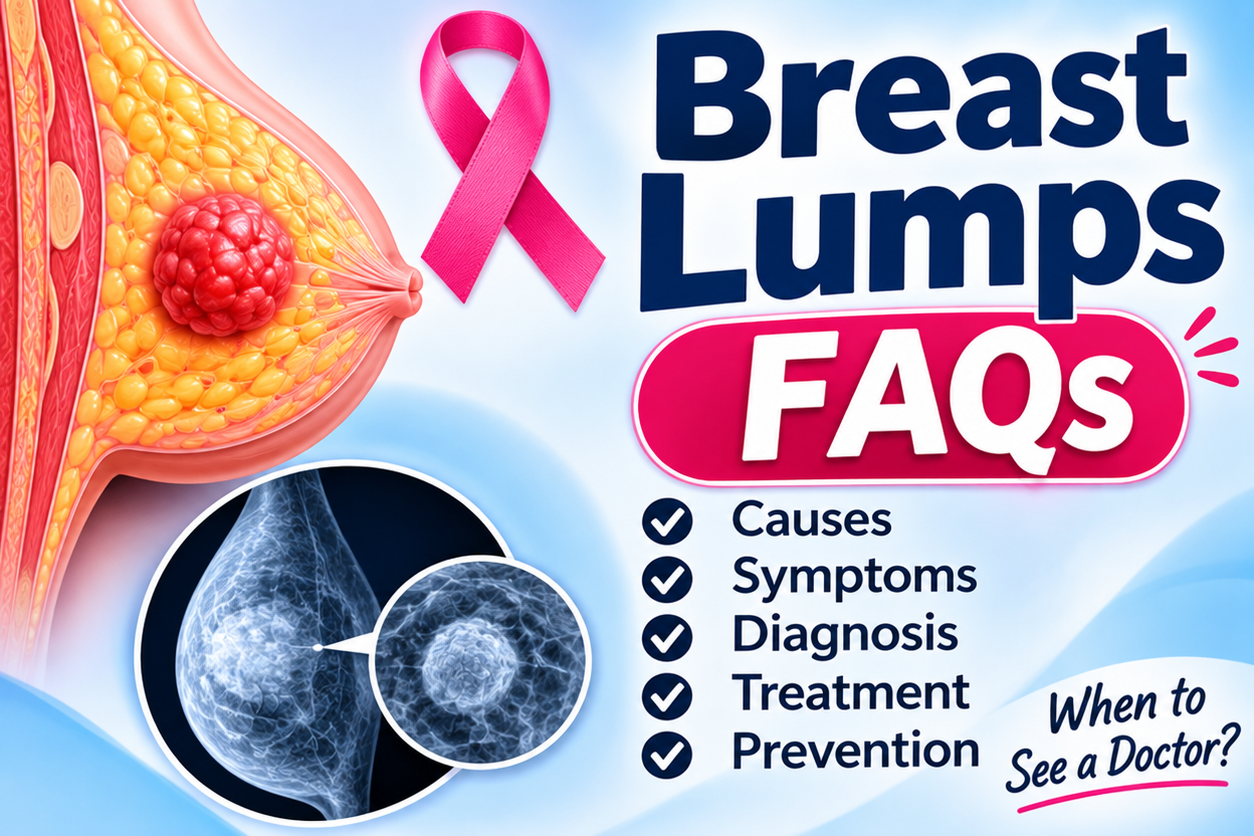
A breast lump is an unusual swelling, mass, or thickened area in the breast. It may feel soft, firm, or hard and can occur in one or both breasts.
2. What are the common causes of breast lumps?
Breast lumps can develop due to several reasons, including:
Breast cysts.
Fibroadenomas.
Hormonal changes.
Breast infections.
Fibrocystic breast changes.
Breast injuries.
Breast cancer.
3. Are all breast lumps cancerous?
No. Most breast lumps are benign, meaning they are not cancerous. However, a breast lump should always be evaluated by a healthcare professional to identify its cause and rule out serious conditions.
4. What are the symptoms of breast lumps?
Common symptoms may include:
A noticeable lump or swelling in the breast.
A change in breast size or shape.
Breast pain or tenderness.
Thickening of breast tissue.
Swelling in the armpit.
Changes in the skin over the breast.
Nipple discharge.
Some breast lumps may not cause any pain or discomfort.
5. Can breast lumps cause pain?
Yes. Some breast lumps may cause pain or tenderness, particularly breast cysts, infections, and hormonally related breast changes.
However, many benign and cancerous breast lumps are painless.
6. What is the difference between benign and cancerous breast lumps?
Benign breast lumps are non-cancerous and generally do not spread to other parts of the body. Cancerous breast lumps contain abnormal cells that may grow into surrounding tissues and spread to other organs.
A physical examination or touch alone cannot reliably distinguish between them.
7. What is a breast cyst?
A breast cyst is a fluid-filled sac that develops within breast tissue. It may feel smooth, round, or slightly firm and can sometimes cause tenderness.
Breast cysts are usually benign and may change in size with hormonal fluctuations.
8. What is a fibroadenoma?
A fibroadenoma is a common benign breast tumour that usually occurs in younger women.
It typically feels:
Smooth and firm.
Round or oval.
Easily movable under the skin.
Usually painless.
Most fibroadenomas do not require treatment unless they grow, cause discomfort, or have concerning features.
9. Can hormonal changes cause breast lumps?
Yes. Hormonal changes during menstruation, pregnancy, and menopause can affect breast tissue.
Some women may notice breast swelling, tenderness, or lumpiness before their menstrual periods. These changes may improve after menstruation.
10. Can breast lumps occur during pregnancy?
Yes. Breast lumps can occur during pregnancy due to hormonal changes and increased breast tissue activity. Some may be related to cysts, fibroadenomas, or blocked milk ducts.
Any new breast lump during pregnancy should be evaluated by a doctor.
11. Can breast lumps occur in men?
Yes. Men can also develop breast lumps. One common cause is gynecomastia, which involves enlargement of breast gland tissue due to hormonal changes.
However, a new or unusual lump in a man's breast should also be medically evaluated to rule out other conditions, including breast cancer.
12. How are breast lumps diagnosed?
Doctors may recommend different tests depending on the patient's age, symptoms, and clinical examination.
Common diagnostic tests include:
Clinical breast examination.
Breast ultrasound.
Mammogram.
Breast MRI in selected cases.
Breast biopsy.
These investigations help determine whether the lump is benign or cancerous.
13. What is a breast ultrasound?
A breast ultrasound is an imaging test that uses sound waves to examine breast tissue. It helps identify whether a breast lump is fluid-filled, solid, or has mixed features.
It is commonly used to evaluate breast lumps, particularly in younger women.
14. What is a mammogram?
A mammogram is an X-ray examination of the breast used to detect abnormal changes in breast tissue.
It can help identify lumps, calcifications, and other changes that may not be noticeable during a physical examination.
15. When is a breast biopsy required?
A breast biopsy may be recommended when imaging or clinical examination shows a suspicious area.
During the procedure, a small sample of breast tissue is collected and examined under a microscope to check for abnormal or cancerous cells.
16. How are breast lumps treated?
Treatment depends on the underlying cause.
Common treatment approaches include:
Observation and regular monitoring for certain benign lumps.
Pain-relief medication when appropriate.
Antibiotics for bacterial breast infections.
Drainage of certain breast cysts.
Surgical removal of selected lumps.
Cancer-specific treatment if breast cancer is diagnosed.
17. Can breast lumps disappear on their own?
Some breast lumps, especially those related to hormonal changes, may become smaller or disappear without treatment.
Certain cysts may also resolve naturally. However, a new lump should not be ignored even if it is painless or seems to reduce in size.
18. What are the warning signs of breast cancer?
Some warning signs include:
A new lump in the breast or armpit.
Changes in breast size or shape.
Nipple turning inward.
Bloody nipple discharge.
Dimpling or puckering of breast skin.
Redness or thickening of breast skin.
Persistent swelling in the breast.
Not every breast cancer causes these symptoms. Some may be detected through screening before symptoms appear.
19. How can breast lumps be prevented?
Not all breast lumps can be prevented. However, maintaining breast health is important.
Helpful measures include:
Maintaining a healthy lifestyle.
Staying physically active.
Limiting alcohol consumption.
Being familiar with the normal appearance and feel of your breasts.
Attending recommended breast cancer screening.
Consulting a doctor about any unusual breast changes.
20. When should you consult a doctor for a breast lump?
You should consult a healthcare professional if you notice:
Any new breast lump.
A lump that increases in size.
Persistent breast pain.
Changes in nipple appearance.
Unusual nipple discharge.
Swelling in the armpit.
Changes in breast skin, such as dimpling or thickening.
Early medical evaluation helps identify the cause and ensures appropriate treatment.
Conclusion
Breast lumps are common and can develop due to several conditions, most of which are benign. However, some lumps may indicate breast cancer. Early evaluation, appropriate imaging tests, and timely medical care are important for accurate diagnosis.
AI GENERATED
Ms. Siddiq nisha U. Bsc (Nsg)
Dr. Karthikeyan S. MBBS.,