0%
Reading Progress
Scroll to track your progress
Frequently Asked Questions
1. What is low blood pressure?
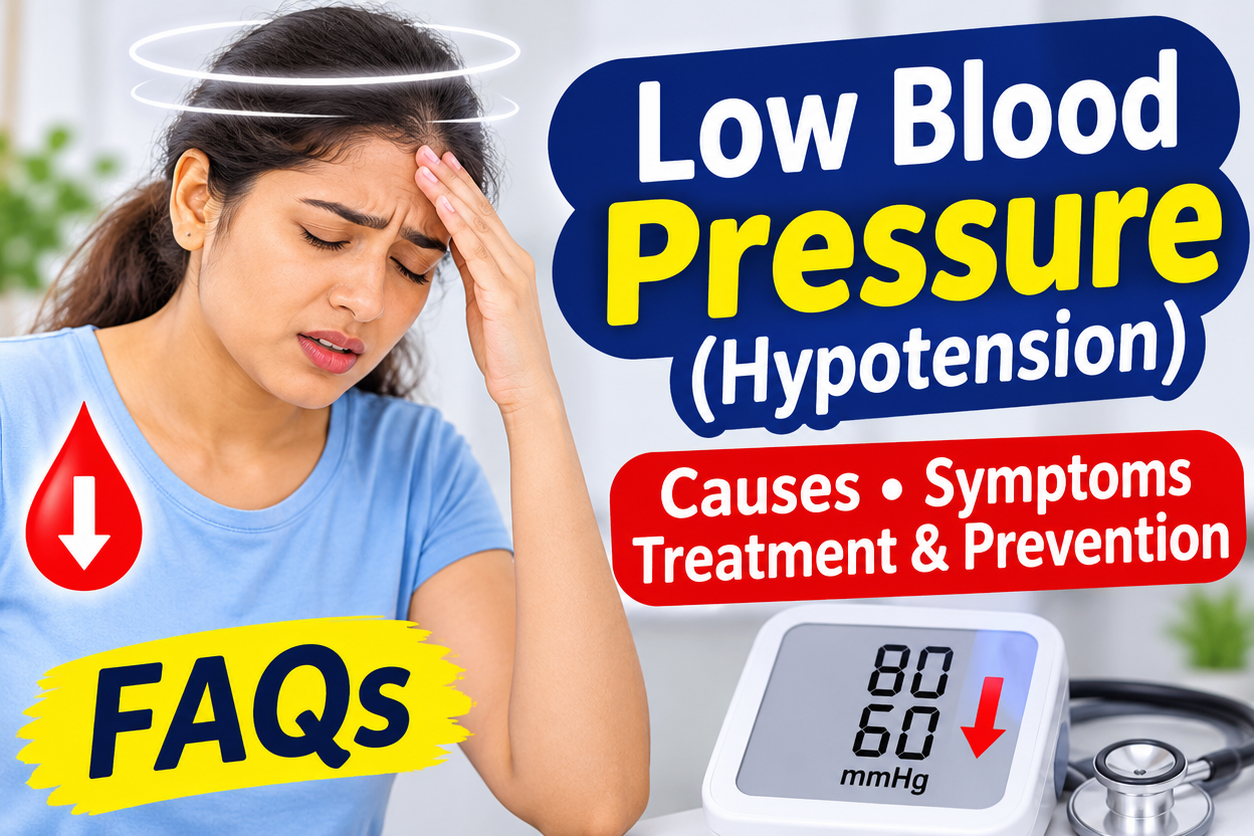
Low blood pressure, also called hypotension, is a condition in which the blood pressure is lower than normal. Generally, a reading below 90/60 mmHg is considered low blood pressure.
2. What are the common symptoms of low blood pressure?
Common symptoms include:
Dizziness or lightheadedness
Feeling weak or tired
Blurred vision
Nausea
Fainting
Difficulty concentrating
3. What causes low blood pressure?
Low blood pressure can occur due to:
Dehydration
Blood loss
Nutritional deficiencies
Heart-related problems
Hormonal disorders
Certain medications
Pregnancy
4. Is low blood pressure dangerous?
Mild low blood pressure may not cause problems. However, a sudden or severe drop in blood pressure can reduce blood flow to important organs and may require immediate medical attention.
5. How is low blood pressure diagnosed?
It is diagnosed by measuring blood pressure using a BP monitor. Doctors may also recommend blood tests, an ECG, or other investigations to identify the underlying cause.
6. How can low blood pressure be treated?
Treatment depends on the underlying cause. It may include:
Drinking enough water
Increasing fluid intake
Adjusting medications under medical advice
Treating nutritional deficiencies
Managing underlying health conditions
7. What foods help manage low blood pressure?
A balanced diet may help maintain healthy blood pressure. Include:
Fruits and vegetables
Whole grains
Protein-rich foods
Adequate fluids
Salt in appropriate amounts, if recommended by a doctor
8. Can dehydration cause low blood pressure?
Yes. Dehydration reduces the amount of fluid in the bloodstream, which can lead to low blood pressure and dizziness.
9. Can low blood pressure cause fainting?
Yes. When blood pressure drops significantly, the brain may receive less blood flow, causing dizziness or fainting.
10. When should you see a doctor for low blood pressure?
Consult a doctor if you frequently experience dizziness, weakness, blurred vision, or fainting. Seek emergency medical attention if low BP is accompanied by chest pain, severe breathlessness, confusion, or signs of shock.
11. How can low blood pressure be prevented?
You can help prevent episodes by:
Drinking sufficient water.
Avoiding sudden changes in posture.
Eating regular, balanced meals.
Avoiding prolonged standing.
Following your doctor's medication advice.
12. What is the normal blood pressure range?
For most adults, normal blood pressure is generally around 120/80 mmHg. Readings vary depending on age, health conditions, and individual factors.
Conclusion
Low blood pressure is a common condition that may cause dizziness, weakness, and fainting. Identifying the underlying cause, maintaining proper hydration, and following medical advice can help manage the condition effectively.
AI GENERATED
Verified and approved by
Ms. Siddiq nisha U. Bsc(Nsg)
Dr. Karthikeyan S. MBBS.,