0%
Reading Progress
Scroll to track your progress
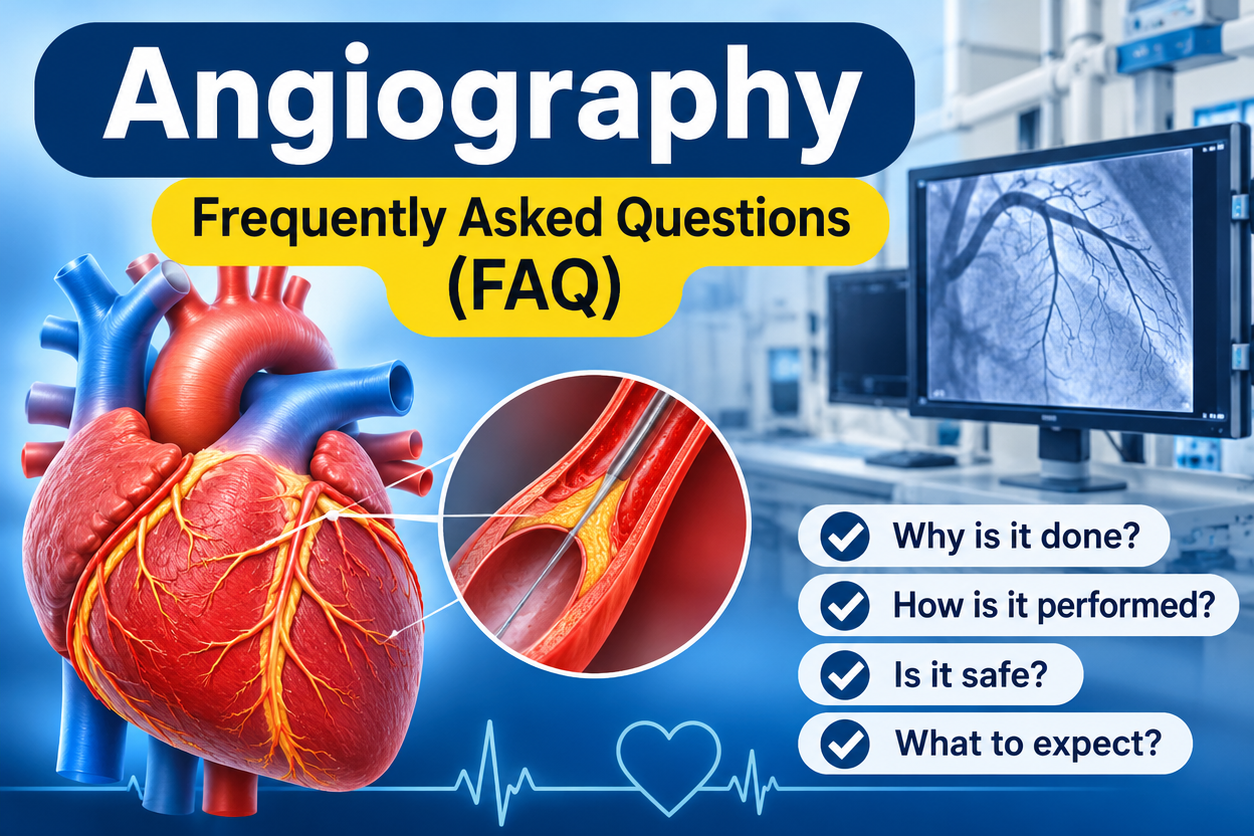
Introduction Angiography is a medical imaging procedure used to examine blood vessels and check for narrowing, blockages, or other abnormalities. It helps doctors understand blood circulation and diagnose conditions affecting the heart, brain, kidneys, and other parts of the body. Coronary angiography is a commonly performed type that helps identify blockages in the blood vessels supplying the heart.
Frequently Asked Questions (FAQ)
1. What is angiography?
Angiography is a diagnostic procedure that uses a special dye (contrast material) and X-rays to examine blood vessels and identify narrowing, blockages, or abnormalities.
2. Why is angiography performed?
Angiography may be recommended to:
- Detect blocked or narrowed blood vessels.
- Evaluate chest pain or suspected heart disease.
- Investigate poor blood circulation.
- Identify blood vessel abnormalities.
- Assess blood flow to the brain or other organs.
3. What are the different types of angiography?
Common types include:
- Coronary angiography – examines blood vessels supplying the heart.
- Cerebral angiography – examines blood vessels in the brain.
- Peripheral angiography – examines blood vessels in the arms and legs.
- Pulmonary angiography – examines blood vessels in the lungs.
- Renal angiography – examines blood vessels supplying the kidneys.
4. How is angiography performed?
A thin tube called a catheter is inserted into a blood vessel, usually through the wrist or groin. A contrast dye is injected, and X-ray images are taken to examine blood flow and identify blockages.
5. Is angiography painful?
The procedure is usually not painful. Local anaesthesia is given at the catheter insertion site. Some people may experience mild discomfort or a warm sensation when the contrast dye is injected.
6. How long does angiography take?
A routine coronary angiography usually takes around 15–30 minutes, although the duration may vary depending on the patient's condition and procedure complexity.
7. Is angiography a major surgery?
No. Angiography is generally a minimally invasive procedure. It does not require a large surgical incision.
8. How should I prepare for angiography?
Before the procedure:
- Follow your doctor's fasting instructions.
- Inform your doctor about existing medical conditions.
- Share details of all medications and allergies.
- Inform your doctor if you have kidney problems or a previous reaction to contrast dye.
- Follow instructions regarding diabetes and blood-thinning medications.
9. What are the risks of angiography?
Angiography is generally safe, but possible risks include:
- Bleeding or bruising at the insertion site.
- Allergic reactions to contrast dye.
- Infection.
- Blood vessel damage.
- Kidney injury, especially in people with existing kidney problems.
- Rarely, heart attack or stroke.
10. What happens after angiography?
After the procedure, the patient is monitored for some time. The catheter is removed, and pressure is applied to prevent bleeding. Patients may usually return home the same day, depending on their condition and doctor's advice.
11. How long does recovery take after angiography?
Most patients recover within a few days. Recovery time depends on the catheter insertion site, individual health, and whether any additional treatment was performed.
12. Does angiography detect heart blockages?
Yes. Coronary angiography helps identify narrowed or blocked coronary arteries and shows the location and severity of the blockage.
13. What is the difference between angiography and angioplasty?
Angiography is a diagnostic procedure used to identify blood vessel blockages. Angioplasty is a treatment procedure used to open narrowed or blocked blood vessels, sometimes with the help of a balloon or stent.
14. Is angiography safe for older people?
Angiography can be performed in older adults when medically necessary. Doctors evaluate overall health, kidney function, and other risk factors before recommending the procedure.
15. When should I consult a doctor?
Consult a doctor if you experience persistent chest pain, unexplained breathlessness, or symptoms suggesting poor blood circulation. Sudden chest pain, severe breathlessness, or stroke symptoms require immediate emergency medical attention.
Conclusion
Angiography is an important diagnostic procedure that helps doctors identify blood vessel problems and plan appropriate treatment. Early diagnosis can help prevent complications and improve patient outcomes. Always consult a qualified healthcare professional to understand whether angiography is necessary for your condition.
AI GENERATED
Verified and approved by
Ms. Siddiq nisha U. Bsc(Nsg)
Dr. Karthikeyan S. MBBS