0%
Reading Progress
Scroll to track your progress
Frequently Asked Questions
1. What is Deep Vein Thrombosis (DVT)?
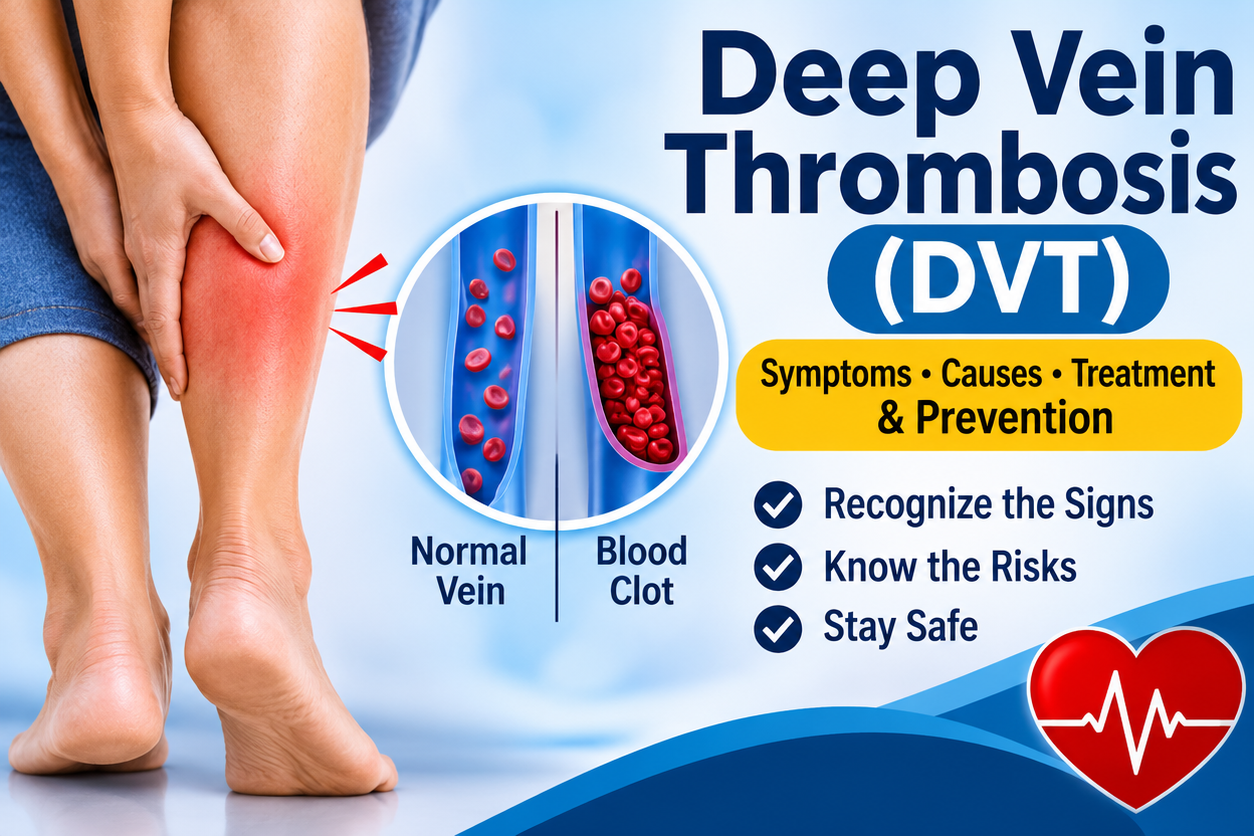
Deep Vein Thrombosis is a condition in which a blood clot develops in a deep vein, most commonly in the leg or thigh. It can affect normal blood circulation.
2. What are the common symptoms of DVT?
Common symptoms include:
* Swelling in one leg.
* Pain or tenderness in the calf or thigh.
* Warmth in the affected area.
* Redness or discoloration of the skin.
* Leg discomfort that may increase while walking or standing.
Some people may not experience noticeable symptoms.
3. What causes Deep Vein Thrombosis?
DVT occurs when blood flow slows down or blood becomes more likely to clot. Common causes include:
* Long periods of sitting or bed rest.
* Recent surgery or injury.
* Pregnancy and the postpartum period.
* Certain medical conditions.
* Hormonal medications.
* Previous history of blood clots.
4. Who is at risk of developing DVT?
People with the following risk factors have a higher chance of developing DVT:
* Older age.
* Obesity.
* Smoking.
* Family history of blood clots.
* Prolonged hospitalization.
* Cancer and certain chronic illnesses.
* Long-distance travel with limited movement.
5. How is DVT diagnosed?
Doctors may recommend the following tests:
* Doppler ultrasound: Checks blood flow and identifies blood clots in veins.
* D-dimer blood test: Helps assess the possibility of abnormal blood clot formation.
* Venography: Occasionally used to examine veins in detail.
6. Is Deep Vein Thrombosis dangerous?
Yes. DVT can become dangerous if part of the blood clot breaks away and travels to the lungs, causing pulmonary embolism. This condition requires immediate medical attention.
7. What is pulmonary embolism?
Pulmonary embolism occurs when a blood clot blocks an artery in the lungs. Symptoms may include sudden breathlessness, chest pain, rapid heartbeat, coughing up blood, or fainting. It is a medical emergency.
8. How is DVT treated?
Treatment depends on the severity and location of the clot. Common treatment options include:
* Blood-thinning medications (anticoagulants).
* Compression stockings in selected patients.
* Clot-dissolving medications in certain serious cases.
* Medical procedures to remove or break down clots in selected situations.
9. Can Deep Vein Thrombosis be prevented?
Yes. Some preventive measures include:
* Walking and moving regularly.
* Avoiding prolonged sitting.
* Maintaining a healthy body weight.
* Staying hydrated.
* Moving your legs during long journeys.
* Following medical advice after surgery.
10. Can DVT occur without symptoms?
Yes. Some people with DVT do not experience any noticeable symptoms. In certain cases, the condition is discovered only during medical investigations.
11. How long does it take to recover from DVT?
Recovery varies depending on the size and location of the clot and the individual's health. Treatment often continues for at least three months, although some people may need longer treatment.
12. Can DVT happen again?
Yes. DVT can recur, especially in people with previous blood clots or ongoing risk factors. Following the prescribed treatment plan and attending regular medical check-ups can help reduce the risk.
13. When should you seek medical attention?
Consult a doctor immediately if you experience unexplained swelling, pain, warmth, or redness in one leg.
Seek emergency medical care if you develop sudden breathlessness, chest pain, coughing up blood, or fainting.
Conclusion
Deep Vein Thrombosis is a serious but treatable condition. Recognizing the symptoms, understanding the risk factors, and seeking early medical attention can help prevent life-threatening complications. Regular movement and appropriate preventive care are important for maintaining healthy blood circulation.
AI GENERATED
Verified and approved by
Ms. Siddiq nisha U.Bsc (Nsg)
Dr Karthikeyan S. MBBS